
3 Reasons to Cultivate Gratitude for Teachers
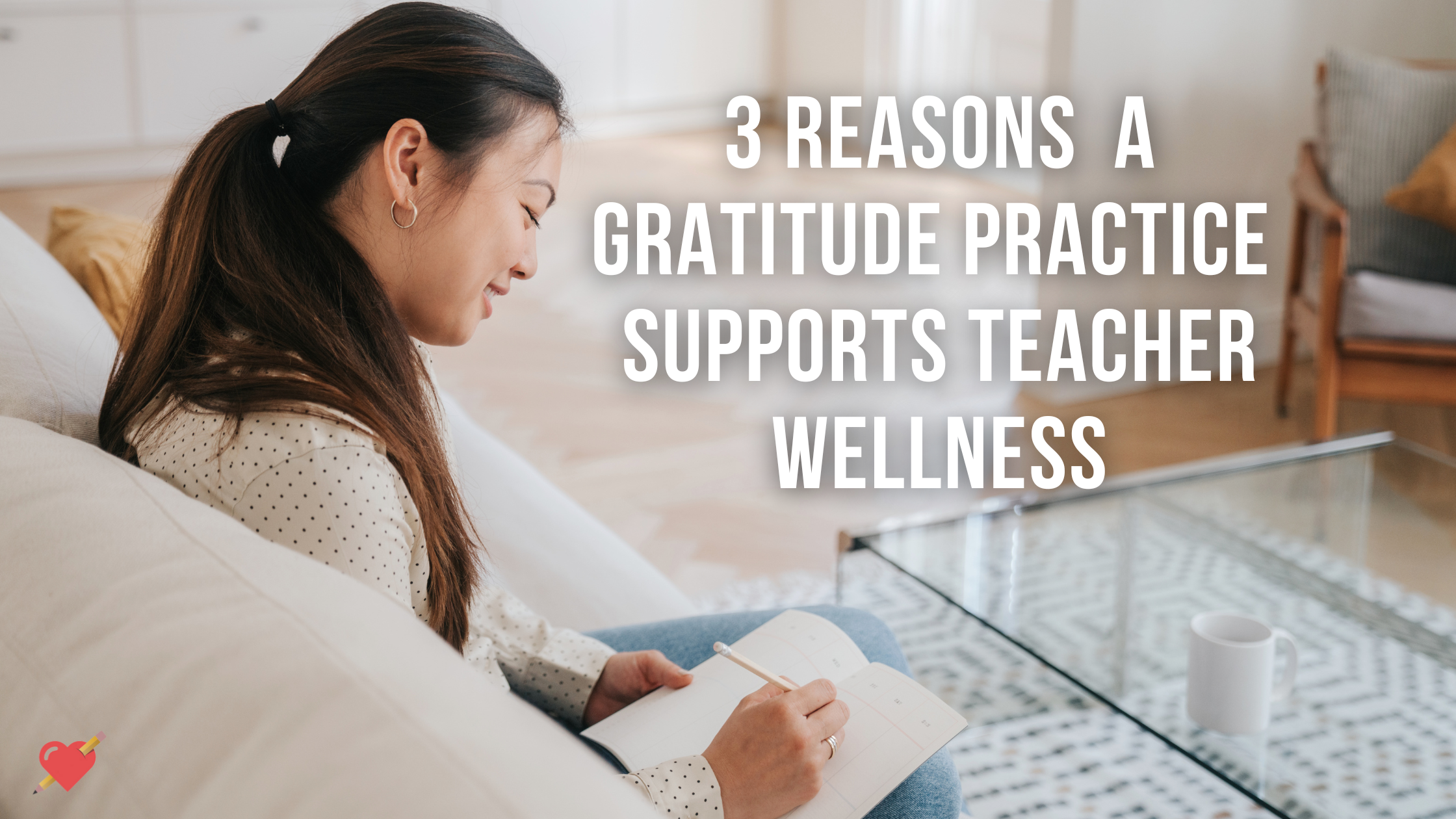
As fall turns to winter, it’s not surprising that “focusing on the positive” might become more difficult. When I share with fellow educators (and my own family) the importance of gratitude for teachers, sometimes I’m met with an eye roll or blank stare. This is understandable! Not only are we experiencing seasonal shifts that affect our bodies and minds in real ways, but the time change, cold and flu season (and a myriad of other day-to-day demands), influence our ability to identify the things we appreciate in our lives and feel truly thankful for teachers—including ourselves.
And still, cultivating a gratitude practice for teachers has so many benefits!
Teachers enter the profession with a desire to drive change. These aspirations are so important and valid, but after navigating a dysfunctional education system that doesn’t prioritize teacher or student needs, it can become second nature to spiral into a negative space.
Taking care of our students' academic, social-emotional, and physiological needs may lead us to feelings of despair and overwhelm, especially when we don’t have the support we need or the resources we deserve. We might say things like, “I can never do enough” and “Why am I the only one who cares?”
Although it can be challenging to get started, research shows that cultivating a gratitude practice for teachers is a powerful tool in promoting teacher wellness.
Keep reading to explore three key reasons why practicing gratitude can help educators manage stress, build resilience, and improve their overall wellness to find clarity.
3 Reasons to Be Thankful for Teachers (and Why Gratitude Is a Form of Self-Care)
There are many ways that gratitude practices can help teachers feel more fulfilled and take better care of themselves. Here are a few examples:
1. Gratitude eases stress & boosts emotional resilience
When stress saturates us, we experience symptoms internally and externally. Characteristics like apathy, cynicism, and isolation might emerge. Although these characteristics are not actually our personality, we may get used to them over time. Fortunately, incorporating a gratitude practice for teachers can support us in metabolizing stress and increase our emotional resilience.
Whether or not we choose to stay in the classroom, or find work as educators beyond the classroom, it’s important to develop healthy practices that allow us to experience the beauty and joy in life, even when things are hard.
2. Gratitude promotes a positive work environment and builds relationships
When things are difficult in the classroom or school-wide, the stress can affect our relationships with colleagues and students. Since teachers crave connection with their teaching community, it’s a difficult pill to swallow when the stress starts impacting our ability to show up for each other.
Positive relationships are the antidote to stress and essential for fostering an environment where everyone feels valued and a strong sense of belonging.
Thankfully, practicing gratitude for teachers can help strengthen relationships and promote a positive work environment by focusing on something we can control – the way we treat each other. It’s a courageous act to show up every day and decide to foster a supportive and safe atmosphere.
Try it out:
Create an appreciation board. When teachers express gratitude to their students, colleagues, and even themselves, this simple act of kindness increases motivation, builds trust, and creates an environment where people feel like their actions are valued contributions to the collective. Even more, expressing gratitude for teachers fosters stronger professional connections which help even when you decide it’s time to use your expertise beyond the classroom.
Choose a space for the appreciation board. A bulletin board, chalkboard, or large piece of paper will work.
Create a title for your board like, “What You Do Counts!” or stay simple with “We Appreciate You!”
Use colorful pieces of paper or sticky notes and set out an assortment of creative materials like pens and stickers.
Send an email to peers to let them know how to interact with the appreciation board.
Get started and don’t forget to mention the small stuff. Whether someone brought in muffins to share, or helped during a difficult day, everything counts. Even more, students will enjoy getting in on the fun to share words of appreciation to teachers and their peers.
Start a gratitude circle. If you're teaching a group of students, consider incorporating gratitude into your classroom routine.
Explain what gratitude is to students. For example, you might say, “Gratitude is feeling thankful for things in our life.” Include the benefits of gratitude like improved mood, decreased stress, increased happiness, and more connection with others.
Have students share something they’re grateful for each day, whether through journal writing or during morning meeting.
Be explicit about expectations. For example, remind students what listening looks, sounds, and feels like. Listening is a core component of developing empathy. When we truly listen, we learn more about each other.
Invite students to share something they learned about their peers after listening to the things they are grateful for.
3. Gratitude improves overall wellness and clarity
Burnout is common in all professions, but teachers face burnout at a higher rate. One survey by Rand shows that teachers are more than twice as likely to be stressed as other working adults. Warning signs of burnout include (but are not limited to) decreased appetite, fatigue, anxiety or depression, inability to find joy in life, and increased irritability.
Although it may seem counterintuitive to practice gratitude when facing feelings of overwhelm and burnout, the mere practice of focusing on the things that you are grateful for can provide you with clarity about next steps.
Try it out:
Find a time when you have the space to reflect and express gratitude.
Get out a blank piece of paper and jot down or draw everything you are grateful for about teaching. Ideas might include things like creating curriculum, spending time with students, or coaching novice teachers.
Allow yourself to experience the body sensations that arise after focusing on the things you’re grateful for.
On a different day, bring out your ideas and get out another piece of paper. Jot down or draw all the dreams you have for yourself within the classroom or beyond. Ideas might include things like starting your own education consulting business to support multilingual learners, or creating a workbook for teachers about culturally responsive teaching practices.
Use backward planning to work toward your goals and celebrate each small step along the way.
Gratitude Quotes for Teachers to Inspire Your Practice
These gratitude quotes for teachers can serve as daily reminders of the impact you’re making—even on the hardest days.
“A teacher’s impact doesn’t end at the classroom door—it echoes in the lives of students for years to come.”
“Behind every confident student is a teacher who believed in them first.”
“So much of what teachers do goes unseen—but never unfelt.”
“We are thankful for teachers not just for what they teach, but for how they show up every single day.”
“Teaching is a work of heart—done daily, often quietly, and always with impact.”
“The relationships teachers build are just as powerful as the lessons they teach.”
“Take a moment to be grateful—not just for your students, but for the teacher you are becoming.”
Taking time to feel thankful for teachers—and the work you do every day—can be a powerful step toward clarity and sustainability.
Get More Support In Your Career Journey
Whether you decide to continue to drive change in the classroom or realize that you’re ready to explore alternative jobs for teachers beyond the classroom, the Educator Forever community is here to support you along the way!
Join the Educator Forever Network, where you’ll find step-by-step career guidance, live group calls, and exclusive access to wellness, creativity, and co-working sessions to support your growth.
Plus, our private jobs board connects you to exciting, new flexible job leads daily. You’ll also have an incredible community of like-minded educators cheering you on as you expand your impact and income beyond the classroom.
References:
About The Author

April Brown (M.Ed) is Educator Forever’s Director of Learning and Development and a curriculum coach for the Curriculum Development Foundations and Advanced Curriculum certification programs. In 2015, April began designing curriculum and writing articles for an EdTech company as a side gig while teaching in Placencia, Belize. After having her daughter in 2016, April was eager to use her unique experience teaching and leading in mainstream and alternative settings in the United States and internationally to work remotely while still making a difference in education.
The Educator Forever Network empowered April to leverage her skills as a compassionate disruptor and out-of-the-box thinker to excel as an instructional/well-being coach, adjunct instructor of Trauma Supportive Schools and Mindfulness courses, curriculum developer, and writer for publications such as PBS SoCal, Education.com, and Britannica for Parents. April is an advocate for teachers and students – inside and outside of the classroom. You can find April in rural Vermont spending time with her husband, two beautiful daughters, and charming rottweilers.
FAQs
-
Teachers are often thankful for the moments that remind them why they started—student growth, meaningful connections, and small everyday wins in the classroom. This might look like a student finally understanding a concept, a kind note from a family, or support from a colleague during a tough week. Many teachers also feel grateful for opportunities to be creative, build relationships, and make a lasting impact on students’ lives.
-
We should be thankful for teachers because they play a critical role in shaping not only academic success, but confidence, curiosity, and lifelong learning. Teachers support students’ intellectual, emotional, and social development—often going far beyond their job descriptions. Even in challenging systems, they continue to show up, advocate for students, and create safe, supportive learning environments that make a lasting difference.
Last updated: March 20, 2026