
Episode 192: Teaching Success Skills with Rob Heller of the Boost Program
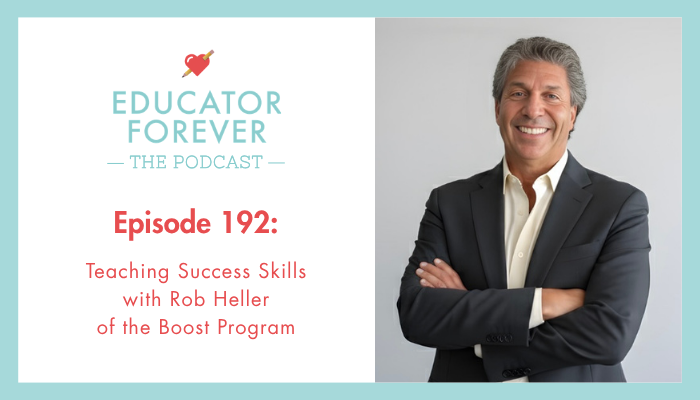
Rob Heller is a successful entrepreneur, youth development innovator, and founder of the Boost Program, a comprehensive personal development curriculum designed to equip teens and young adults with the essential life, social, and mental health skills that traditional education overlooks. Drawing from a century of personal development wisdom—distilling the teachings of Dale Carnegie, Napoleon Hill, and other thought leaders into accessible, actionable lessons—Rob developed Boost as the "missing course" for today's youth.
In this episode, Lily and Rob dive into the creation of the Boost Program and why he thought children needed it. We also get into what makes Boost work and his plans for expansion.
Topics Discussed:
The three main components of Boost
Adjusting to incorporate new technology and platforms
Why phones are the biggest problem in the classroom
Resources mentioned:
If you’re enjoying this podcast, please leave a rating and review on Apple Podcasts.
Related episodes and blog posts:
Read the transcript for this episode:
Welcome to Educator Forever, where we empower teachers to innovate education. Join us each week to hear stories of teachers expanding their impacts beyond the classroom and explore ways to reimagine teaching and learning.
Rob Heller is a successful entrepreneur, youth development innovator, and founder of the Boost program, a comprehensive personal development curriculum designed to equip teens and young adults with the essential life, social, and mental health skills that traditional education overlooks. After selling his insurance firm for eight figures to a publicly held company, Rob witnessed firsthand the critical skills gaps plaguing today's youth in the corporate workplace. This observation, combined with his desire to give his own children the tools they needed to thrive, inspired him to create a solution that didn't exist. Drawing from a century of personal development wisdom, Rob developed Boost as the missing course for today's youth. Through this work, Rob has become a leading voice in the conversation about how phone-based culture has stunted the development of essential interpersonal and character skills, and what parents, educators, and community leaders can do to bridge this critical gap. Welcome, Rob. So nice to have you here.
Rob Heller 0:55
Thank you, Lily. So great to be on your show. Appreciate you.
Lily Jones 0:59
Absolutely. So I always start with the same gigantic question that you can take in any direction you'd like, which is to tell us about your professional journey.
Rob Heller 1:07
Wow, so we're really here to talk about the Boost program, which I started about 20 years ago. I have three kids, the oldest is now early 30s. When he was a teenager, I knew at the end of day, yes, I wanted him to do well academically and go to a good college, and maybe be an athlete, and different things that all parents want for their kids, but I also knew, just as importantly, or maybe even more importantly, was those there was a certain skill set that if he could develop, it just would allow him to thrive in life on every aspect, and as teenagers they can tend to sometimes tune us out, even though I know that's part of the maturation process, but it can feel that way. So I went looking, as any good coach would do, a third-party program that reinforced the lessons that my wife and I were teaching. Couldn't find one, so created Boost. So this was 20 years ago at that time, being a curriculum specialist. You'll appreciate this. It was a CD ROM flash cards workbook on delivery measurements that I thought were really cool at the time. And long story short, it was well received. It was great, but I really got business in my main career, which was always commercial insurance. So build up a business, sold it to a big publicly held company, and thought, okay, I'll go back to Boost. Got caught up in their business world in a good way, was asked to do a different thing around different divisions, and long story short, I've exited that, retired, and now I'm back to Boost, just realizing that these skills are way more important than they were 20 years ago. So that's my career journey.
Lily Jones 2:39
Wonderful. So, talk to us about some of those skills. You know, I have a 14 year old myself. I hear you on the teenagers, and I also hear you on thinking about intentionally as a parent. You know what I want my kids to develop, and so talk to me a little bit about what were those skills that you were hoping to see in your own children, and what led you to develop Boost.
Rob Heller 3:00
So, we, we really call it the three legged stool, so the first would just be people and social skills, and those would be obviously it's about someone else, it's not about you learning how to listen and ask questions, remembering previous conversations, the greeting process, everyone knows the handshake, but just an enthusiasm, saying someone's name, not one upping someone in a conversation, smiling, so all people in social skills, so that would be one leg of the stool. The next one would be character, so being honest and humble and kind and not gossiping, and when you make a mistake, just apologize quickly and sincerely, and say thank you. So all the things under character in the last leg of the stool that wasn't part of the first version. When I created this, is a healthy mindset. We know how much kids are struggling today with mental health, and yet there are certain tools and techniques in a skill set. If they can learn those, it just would give them a better shot. So, just realizing they, their negative thoughts, and reframing them, and setting goals and tools to create calm, realizing that a little bit of stress is actually okay for you, resilience, so again I'm rambling, but it's really all the things under the healthy mindset leg, and I really, what we say is, you need all three legs to be strong.
Lily Jones 4:12
Yes, absolutely. And I think being a classroom teacher, you know, that stuff gets overlooked sometimes, and I think many teachers know that these are the key to success, right, being resilient, being able to keep in a positive mindset, all of these things, yet the focus is so much on content knowledge,.
Rob Heller 4:36
Called the missing course, so we teach math and tons and social studies, you know, all really important subjects, big believer in education and being curious and learning, but at the end of the day, if these skills are going to allow someone to have a great life, why do we not have a course that specifically teaches these skills? So that's really what I'm on mission to do, is create this separate course and curriculum to, we're really focused more on. On 14 to 24 so really kind of maybe eighth grade, but really high school to young adults, because that's there's a big gap there that there really isn't programming and curriculum for that group.
Lily Jones 5:14
So, talk to us. You, you mentioned it started with the CD ROMs. I assume you're not there anymore. Like, what is the Boost program right now? What does it look like? How do people access it?
Rob Heller 5:26
Yeah, so really, one of the things that I went through when I kind of came back to this a couple of years ago is how do we actually engage the next level students. So we really again centered on this, this age group, which is again 14 to 24 but then realizing that for the most part, I really wanted to do it in a live classroom setting, as opposed to just an online course that someone takes, that would be helpful, but not as beneficial as being in a group, role-playing, videotaping them, so they can see themselves as one thing to do something, but when you see yourself on on film, not to make someone feel better, but just to get better, athletes and musicians and any other professional uses that public speakers, etc. and just have heavy discussions again, worksheets, just really have some real in-depth conversations around what I say are 26 skills, so again I have those three legs and soles, and there's 26 separate skills that we focus in on.
Lily Jones 6:21
So thinking about the 26 skills, what have you seen as the impact on students, either you know students who you have used this program, or even your own kids focusing on these skills?
Rob Heller 6:32
So really, that's a great question. That was my biggest concern, because again, I've been in the business world, and by the way, when I was in the business world, my last x amount of years, I, because it was again this big national company, would fly me around to teach the same skills to the young associates in different offices, and I saw how much they craved it. Now, they were early 20s, but they craved this stuff, and really enjoyed it. So, again, that made me excited to think that there was something there, but really, my biggest thing, and again I was going into class to get started, I had to go teach this stuff, which I had never been in a classroom setting before, so this was really new to me, and these are high school kids, so I'm thinking, like, am I really going to engage them, are they going to listen to me, but I was shocked at the level of engagement by making it interesting fun and really teaching them the why behind the skills, so it's not like just a lecture from an adult, it's the why, and how it's really going to help them get better. And I've been very happy to say the engagement has been beyond my, has been beyond the expect, you know, my expectations, and by every survey that they complete, and just, you've been in the classroom for a long time, you know, it, you know, when you have engagement, so I've been very happy with the level of engagement.
Lily Jones 7:49
It seems like the real world connection is so strong, too, that you think about kids, you know, young kids, older kids, they're always asking, "When will I use this? And so, being able to make that case, I could see as being a real winner when it comes to engagement, too,
Rob Heller 8:04
Especially in an AI world, they're realizing, why do I have to do all this memorization when I can just, you know, go on my phone and ask it, you know, a question and get the answer, which I get. I'm not saying it's right, obviously. Then you need to learn how to study and academics and read and write math, you know, again, big believer in that, but again, in the AI world, and also thinking about from an employment perspective, employers have always have said 85% of what we want are quote unquote soft skills, which is what we're teaching, so if 85 you know, we can teach some of the technical stuff, so 85% is the soft skills, why again? Isn't there a class and more courses designed to teach this? And it doesn't matter what you do, you need these skills. We're doing a lot of workforce development with trade organizations that are teaching the next generation, which is a big thing. Trades, and even in those jobs, you need these skills.
Lily Jones 8:58
So, you mentioned the AI world that we're living in right now, and I'd love to hear from you about the role of technology, and you know where it's good, where it's not so good. How you've seen it affecting these interpersonal and personal development skills that you're hoping to help students achieve.
Rob Heller 9:16
Yeah, so I think everyone understands at this point it is, although it's here to stay, and that, and they're going to always have their phones, etc. It is not helping them in so many different ways on so many different fronts, which again is one of the main skills that we teach in Boost, and really we talk about the phone as you controlling it versus it controlling you, you be the puppeteer as opposed to the puppet, and having that phone control you, so remember that again, for the age group that we're talking about, which again is this 14 to 24 Everyone understands under 14 as parents that they're starting to keep, you know, keep them off social media and not have phones, you know, all things. I have a daughter with two granddaughters, and I just see the difference in. Parenting that she's now going with, you know, my granddaughters, so it makes sense, just anything you could do to limit screen time phones up until that, but if there's a certain point when they become, you know, 14, 1516, they're going to have a smartphone, and that's the point that we're trying to get to them to just say, look, you're not going to, you control it, don't let it control you, and they need to hear that the algorithms are coming at you, that you're helping them calculate how much time they're spending on it, that it doesn't make them feel good, that they need to find other ways, and really the biggest takeaway is we help them calculate their, their awake time, and then of that what percent they're on their phone, and then come up with strategies just to figure out some times to limit that, that's really kind of the starting point. So I think this is the starting point with teenagers in a conversation that, and we start with, hey, this affects the whole global, the world in adults, and one of the reasons adults are so concerned is because I feel I'm addicted, so you know, I think if we start from that perspective and say, hey, this is a worldwide problem, and we need to start getting a handle on it. The kids have gotten good. What's interesting is at the wrap-up session, so we have these 26 skills, and at the end of it, there's a list of the 26 skills, and they start to map out which ones I'm good at, which ones I want to work on, and the number one one that they want to work on is the phone addiction. 7% say their phone addiction, so then that gives you a sense of that the next generation realizes it's an issue.
Lily Jones 11:33
That's so telling, and I think also heartening in some ways, you know that students are able to see this as an issue, and we just like you said, same, right? My phone's right here. We all need a break from the phone, and so being able to recognize that and have it even come from them, I think is really powerful.
Rob Heller 11:52
Yeah, absolutely, that's the key, is for them to again just again just start to get some control. We really kind of say, like this, the phone's controlling you, like it controls me many times, where it's just drawing you in, it's controlling your mind, it's controlling your attention. So it's again, I think that's the starting point, is just figuring out sometimes in the day to become phone free, and some strategies around that, and again it seems to be working.
Lily Jones 12:20
Yeah, and what are we missing out on? Because we're so nose to the phone,
Rob Heller 12:25
Yeah, we're missing the one of the reasons that the people skills and social skills have become way more important than when I started this 20 years ago is because it's the phone-based world and texting and not having those conversations in more isolation, so that's one of the reasons why the people skill portion of what we teach is just so important. We are, we are wired to connect. That's when we're at our best. That's when we feel great, and that's one of the things that we stress and boost.
Lily Jones 12:52
So, it might be hard to pick just one important skill, because they're all important. But I'd love to hear from you, thinking about teenagers right now. What is the most important life skill you think we should help them develop?
Rob Heller 13:04
Yeah, so clearly the phone one is big. We talked about that, but to me, the one, and it's this was 20 years ago as well, is the idea it's not about you, it's about someone else, that again it's listening and hearing them and asking questions and saying their name and just making it about them, we say, turn the lights off about you and make it about someone else. So, when you do that, as you know, Lily, just create that connection with someone, and you just become likable, and you feel better. Like, that's the key. Is not only are you likable, and it helps you, but you just feel better. So, that's one of the things that we stress. It in Busan, the good news is, anyone can do it. You don't have to be an extrovert, you don't have to be the class clown or center of attention. Anyone can do that. If you just learn a couple skills, just by asking a couple quick questions, or giving a compliment, or smiling, or doing some other basic skills, once you do that, it really, you, that connection just happens.
Lily Jones 13:58
I love that there's an easy entry point, too. Right, it's just doing these small things. It's not, you know, a whole speech you're giving or things like that. And I see the real shift in mindset there, too. It seems like it's really tied to being curious, and being a curious person means looking beyond yourself.
Rob Heller 14:15
Absolutely. So, in all those things that I just mentioned, has to be done authentically, where you really do care. You are interested, and again, that's a skill, skill that you can develop. My mom actually taught me that skill when I was younger, when we'd go visit, you know, a friend or relative, she'd start preparing me, okay, so and so's cousin, this is happening, or so other things that were happening in life, and as soon as I'd get there, I'd say, oh, how about this, or how about that, and then immediately they'd be like, oh, wow, Rob, so mature, and what a nice young man, and it was I asked three questions, that's all it took. So, again, I don't mean to make it that easy, but you know, I hate to say it, but it's pretty easy.
Lily Jones 14:51
I love that it's easy, though. I mean, seems it seems doable and approachable, and also the intention, I think, is so important. You know, it's the. Small actions, but it reveals so much of what's important to you and the values behind that as well.
Rob Heller 15:05
Absolutely, yeah, there's no question, the values again. A big part we've only touched on is just the character stuff, is just living to your values and how you want to be viewed, you know, that's that's the key, is that, and that's really how we start again the engagement right out of the gate. We put up on a board. Okay, you're 14 now, 10 years from now you're 24 What's that look like? What do you want? They always start with all the material stuff. I want the car, I want a man, you know. Then we go deeper. I want friends, I want a family, I want to be viewed a certain way in the community. You know, when I get knocked down. I want to get back up, so we basically say you can have all this. It doesn't mean you know if you just learn these skills that we're going to teach over x amount of weeks, then you can have all these things. It doesn't mean it's going to be easy, you're not going to not have challenges, but it just, if you develop these skills, you can have everything that's up on that board.
Lily Jones 16:00
In teacher language, we call that, like, constructivism, like constructing their own understanding, and I love how you said, you know, kind of pushing them to think more, like, what do you really want, what do you really want, and that they even came out with this idea of perseverance, being knocked down and getting back up again, and so same thing with the phone, I heard you say, too, right, like we can hear it from the kids themselves, and I think one thing that you know research shows us is when it comes from the kids, when they have buy-in, they're going to learn so much more. It's so much more effective than if we sit up there going, "Hey, well, you need to persevere or you need to turn off your phone.
Rob Heller 16:32
That's exactly right. Now that's that's right on the money, exactly right.
Lily Jones 16:38
So, thinking about the Boost program, are there any lessons that you think are kind of surprising, or that we'd be curious?
Rob Heller 16:47
I actually have one for you. So, yeah, these exit surveys, and again, they list it. So, number one was the phone, number two really shocked me, and it was one of our lessons is not the gossip, and I knew that was important, and I knew that there was some interest when we, you know, would have that discussion, but I didn't realize it would turn out to be number two, and really, when we centered it around, hey, you don't want to, we, you know, that one person that's just gossiping about everyone, and you don't feel comfortable with them because you know they're probably gossiping about you, that really opened some eyes, so I was really surprised that that was number two on the list.
Lily Jones 17:23
Interesting, yeah, that paints a picture of what's important to teenagers, too. No doubt. So, going back to the idea of, like, well, how do we measure the impact of this program, and thinking about, I mean, it seems hard to me, right? Like, how to measure what's working when so much of it is done internally, and there are these internal shifts that we're hoping to develop amongst teens and young adults. So, can you talk to us a little bit about measuring that, or even just like, what does transformation look like with these young adults?
Rob Heller 17:56
That is, again, I know these are really good questions. So, to me, what I, because I thought about this a lot, because again we don't have sort of, you know, 20 year formalized study of to see the effect, but what I really was hoping for is that after the set booth sessions, no matter how many weeks it is, that they would come away saying I now understand how skill-based life is, and set them on a journey, just to, for the rest of their life, to want to learn more. Like, that's really the goal, is to understand how these skills can help them, and realize what they're good at, and lean into it, because there's certain ones they probably already, they are already good at, and it's working for them, and they never knew why, and other ones that they wanted to work on, and just really set them up for a lifetime of learning, and to look back, it's at a point, whether it's five years or 10 years, 20, whatever it is, to say, you know what, that was really a great course, because it really changed my thinking about certain things. An example of that was, I remember my uncle, who I'm really close with was reading emotional intelligence when it first came out, that Daniel Goldman's book, this is again, what was it, 25 years ago, and I remember we talked about it, and it just opened my eyes to again how skill based this stuff is, and that really kind of set me on my journey, so that I'm hoping for a similar outcome, and so far it's had the students are saying there's one stat where they now, before it was like 20% of them would say they realized how skill-based life is, and now it's up to 95% when they're amazing.
Rob Heller 19:34
Yeah, and you just see again, just being a teacher can see the interaction when they're coming up to after class or before class or seeing you like an older group that had been with you coming into your class and talking about how it's helping them.
Lily Jones 19:48
Yeah, it's so interesting having them realize this too. Like, it seems like just this awareness is so powerful because once you have that of just seeing how. Based life is, and how you see these things in action can really be where the transformation happens.
Rob Heller 20:06
Absolutely, 100%
Lily Jones 20:09
So, where do you see Boost growing from here?
Rob Heller 20:12
So, I would love to see it become a worldwide program. Again, this is a global issue. We're just getting started again. We're in high schools and workforce development, and there's a couple different ways they could either, you know, contract with a boost coach to come in and teach it, or they could get certified and teach it themselves, and we're also creating a community for like-minded people to that they can kind of trade ideas, because so many organizations, anyone that works with today's youth, it's something all adults agree with, is that you know we need to, you know, train up the next generation, so but yet each organization or school or workforce development is kind of off on their own trying to put something together, so again creating that community where they can trade ideas and what's working and what's not, and again I think it should be a global initiative that I think it should be a global movement.
Lily Jones 21:05
Yeah, the community piece is so key. I mean, I think not to get too nerdy learning science, but that's really how we learn, right? We learn together with other humans, so putting those teachers or people using the program together and having them learn together, I could imagine even also having some connections of different young adults who maybe have been through a program, you know, in Tennessee versus Idaho, you know, bringing them together somehow to learn.
Rob Heller 21:29
Absolutely, no, it's a great idea, and you know that that psychology and the importance of it better than me.
Lily Jones 21:35
So it's been so nice talking with you, Rob. Can you tell folks how they can connect with you and learn more about Boost.
Rob Heller 21:42
Sure, yeah, I would just go to Boost program.com You'll, you know, ton of information there. There's one drop down that really works. You'll see some testimonials. If anyone wants to email me directly, I love talking about this stuff, as you can tell. So, even if you want to email me, just set up the time to talk on any level. Our Heller at Boost Program social media, it's Boost underscore program. Follow Rob Heller, Boost Program, LinkedIn. So, number of different ways to connect. Actually, have a book again, it's called The Missing Course. If you go to Boost program.com or Amazon, you'll see the book too. I think that's a great resource.
Lily Jones 22:17
Wonderful, thank you so much, Rob.
Rob Heller 22:19
Thank you, Lily.
Transcribed by https://otter.ai