
Learn how to build a curriculum development portfolio with writing samples, real project examples, and expert tips to help you stand out to employers.
How to Build a Curriculum Development Portfolio That Gets You Hired (With Examples)
If you're a teacher looking into curriculum development as a career path, you've probably come across job postings asking for curriculum writing samples or a portfolio.
And you might be thinking, What would I even put in a portfolio?
In this guide, we’ll walk you through what to include in your curriculum development portfolio, how to put it together, and how to use it when applying for jobs.
Whether you're hoping to work for an educational publisher, an EdTech company, an education nonprofit, or a curriculum development agency, a strong portfolio can help you showcase your skills and stand out to potential employers.
And if you're just beginning to explore opportunities beyond the classroom, you can also check out our guide to switching from teaching to curriculum development.
What Is a Curriculum Development Portfolio?
A curriculum development portfolio is a collection of work samples that demonstrates your ability to create engaging, effective educational materials.
Think of it as a way to show potential employers what you can do, rather than simply telling them about your skills.
While a teaching portfolio might highlight your classroom management strategies and teaching philosophy, a curriculum developer portfolio focuses on the educational content you've created.
For example, it might include:
A lesson plan with student-facing materials
An assessment and scoring rubric
A complete instructional unit
A standards-alignment document
An example of curriculum you've revised or improved
You don't need dozens of examples. Three to five strong, thoughtfully selected pieces are usually a great place to start.
Educational publishers, EdTech companies, curriculum agencies, and other organizations may ask for these samples when considering candidates for curriculum development jobs.
And if you're wondering what curriculum developers actually do, looking at the types of materials employers request can give you a helpful picture of the work.
What to Include: 4 Curriculum Writing Samples That Prove You Can Do the Job
One of the most common questions I hear from teachers interested in curriculum development is: What should my portfolio actually include?
The best curriculum writing samples depend on the types of jobs you're applying for. These 4 examples are a great starting point.
1. A Lesson Plan With Student-Facing Materials
A well-designed lesson plan is a solid curriculum sample.
Remember that curriculum developers often create materials for teachers they've never met. So you need to include everything another teacher would need to implement the lesson successfully.
For example, your sample might contain clear learning objectives, step-by-step teacher directions, discussion questions, worksheets, and an exit ticket.
Could another educator pick up your lesson and teach it without needing you to explain it? That's a great question to ask when reviewing your work.
You can get more ideas for this in our guides on how to develop a curriculum sample and how to create curriculum.
2. A Complete Curriculum Unit or Module
A complete unit is one of the strongest additions to a curriculum development portfolio because it demonstrates your ability to think beyond an individual lesson.
For example, imagine you're developing a third-grade science unit about ecosystems.
Your sample could include a unit overview, learning objectives, a scope and sequence showing how lessons build on one another, and a culminating assessment.
The goal is to show employers that you understand how to organize learning experiences so students develop knowledge and skills over time. If you've already created a unit for your classroom, you may be able to adapt it for your portfolio.
3. An Assessment and Scoring Rubric
Curriculum development also includes helping students demonstrate what they've learned.
Including an assessment shows employers that you can connect learning objectives with meaningful ways to measure student understanding.
You might share a writing assignment with an accompanying rubric, a performance task, or a set of assessment questions.
For example, if you've developed a middle school persuasive writing unit, you could include the final writing prompt and a rubric that evaluates argument development, evidence, and organization. Explain how the assessment measures the learning goals and why you chose that format.
4. A Standards-Alignment Document
Many curriculum development jobs require writers to align educational materials with specific academic standards.
Showing that you can do this thoughtfully is a valuable addition to your portfolio.
For example, create a simple chart connecting a fifth-grade math standard to the lessons, activities, and assessments that address it.
You could use Common Core State Standards, Next Generation Science Standards, or the standards most relevant to your subject area.
The important part is demonstrating that you understand how standards inform curriculum development rather than simply listing standards on a lesson plan.
How to Build Your Portfolio Step by Step
You might already have some fantastic lesson plans and learning materials from your classroom. But creating curriculum for an educational publisher, EdTech company, or other organization is different from designing lessons for your own students.
Professional curriculum developers often need to follow specific frameworks, meet project requirements, create materials for teachers they've never met, and revise their work based on feedback.
So, before adding your classroom materials to your portfolio, look at them through the eyes of a curriculum developer.
Are the objectives clear? Do the activities and assessments align? What research or instructional approaches informed your decisions? Can you explain why you chose those approaches and how they support student learning? Could another teacher successfully use these materials?
These are the kinds of questions professional curriculum developers think about every day. And learning how to evaluate and improve your work is an important part of preparing for this career.
Step 1: Take Inventory of What You've Already Created
Start by looking through the lessons, assessments, units, and learning materials you've developed throughout your teaching career.
Think about the projects you're proudest of. Maybe you designed a hands-on science unit, differentiated a reading lesson for multilingual learners, or created an assessment that helped you better understand student progress.
These experiences demonstrate valuable transferable teaching skills that can serve as a starting point.
However, keep in mind that materials created for your own classroom aren't always ready to share as professional curriculum writing samples. You may need to adapt them to demonstrate the skills and expectations of the types of organizations you'd like to work with.
And if you don't have existing materials that fit? That's okay, too. Creating new curriculum samples can be a great way to gain practice and showcase your skills.
You’ll also want to make sure you have permission to share any materials created for your school or employer, and remove any confidential or student information.
Step 2: Choose Your Best Three to Five Pieces
Once you've reviewed your existing materials, think about which pieces best demonstrate the skills needed for the curriculum development roles you're interested in.
You might have some classroom materials worth adapting, or you may decide to create new samples that better reflect the types of projects you'd like to work on.
Aim for three to five strong pieces that showcase different skills, such as a complete instructional unit, a detailed lesson, an assessment with a rubric, or a revised curriculum sample.
If you're applying for elementary literacy positions, prioritize literacy examples. If you're interested in middle school science curriculum, showcase relevant science materials.
Remember, quality and relevance matter much more than quantity.
Step 3: Make Your Work Easy for Employers to Understand
Classroom materials aren't always written for someone outside your school.
You might use district-specific terminology, abbreviations, or templates that make perfect sense to your colleagues but aren't immediately clear to a hiring manager.
Take some time to revise your samples so they're professional, polished, and easy to follow.
Step 4: Add Context to Every Sample
This is one of the most important steps! Don't just upload a document and expect employers to understand why it's valuable.
Include a short description, perhaps around 100 words, explaining the purpose of each piece.
And don't just explain what you created. Share why you made the instructional decisions you did! Think about the research, pedagogical approaches, and instructional strategies that informed your work. Why did you choose a particular teaching approach? How does it support student learning? What research or best practices guided your decisions?
Being able to explain the thinking behind your curriculum helps potential employers see that you're not just creating activities. You're making thoughtful, intentional instructional decisions.
For example:
Sample Fourth-Grade Opinion Writing Unit
I developed this five-lesson unit to help fourth-grade students strengthen their opinion writing skills. The unit uses explicit instruction, teacher modeling, guided practice, and opportunities for independent writing to build students' skills over time. I incorporated scaffolding and differentiation to support learners with varying writing abilities, while using formative assessments to monitor progress toward the learning goals. This sample demonstrates my ability to apply instructional best practices, sequence learning experiences, and align assessments with objectives.
If the sample was used in a classroom, you can also mention any outcomes you can substantiate.
These descriptions help employers understand the thinking behind your work and connect your experience to their needs.
Step 5: Get Feedback From an Experienced Curriculum Developer
Once you've organized your portfolio, ask someone with curriculum development or hiring experience to review it.
Getting feedback from someone who understands the expectations of the curriculum development field can help you identify areas for improvement, strengthen your samples, and feel more confident in your work. (That's why we pair every participant in our Curriculum Development Foundations program with a personal curriculum coach!)
They can also help you make sure your materials are clear, easy to navigate, and ready for someone else to use. After all, reviewing and revising your work is an important part of the professional curriculum development process.
Curriculum Development Portfolio Examples From Real Projects
Wondering what curriculum development actually looks like outside the classroom?
Sometimes the best way to figure out what to include in your portfolio is to look at the types of projects professional curriculum developers work on.
At Educator Forever, our curriculum development agency partners with educational organizations to create engaging, standards-aligned learning experiences. Many of the curriculum developers on our team are former classroom teachers who have taken their skills into new roles in education.
Here are three real projects we've worked on, along with ideas you can use when building your own curriculum development portfolio.
Note: The examples below show only a portion of the curriculum developed for these projects... When creating your own portfolio, plan to include complete lessons and/or units, so potential employers can fully evaluate your work.
1. Galactic Polymath: Turning Scientific Research Into Engaging STEM Lessons
One of the exciting things about curriculum development is getting to turn complex ideas into learning experiences that students can actually connect with.
That's exactly what our team did when we partnered with Galactic Polymath!
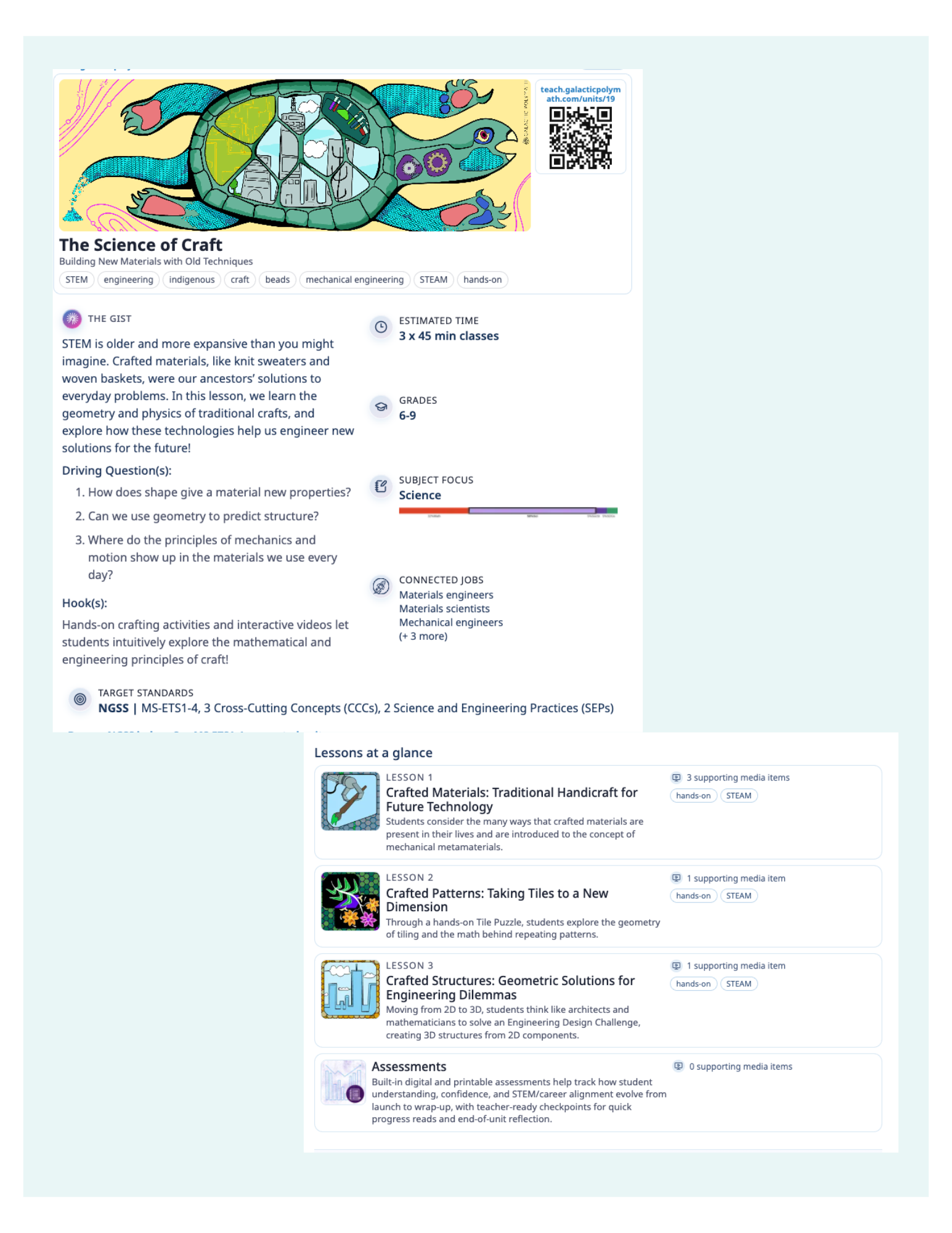
We worked to transform scientific research into a three-lesson STEM unit for middle school students called The Science of Craft.
The project included lesson plans, instructional slides, videos, interactive worksheets, student handouts, and assessments. The materials were designed to make complex scientific concepts accessible and engaging while aligning with the Next Generation Science Standards (NGSS).
What can you learn from this example?
If you're interested in science curriculum development, consider including a unit that demonstrates your ability to take a complex topic and make it understandable for students.
You could showcase a lesson plan alongside student-facing materials, assessments, and a short explanation of your instructional choices.
Employers want to see that you can create curriculum that's both academically rigorous and engaging for students.
Explore the Galactic Polymath curriculum development case study →
2. Changemaker Education: Developing a Flexible K-5 Curriculum
Curriculum development also involves thinking about how different educators and students will use the materials you create.
When Educator Forever partnered with Changemaker Education, our team developed a K-5 curriculum designed specifically for microschools.
The goal was to create a structured instructional framework that could also accommodate different ages, teaching approaches, and learning needs.
We gathered a team of four former elementary educators and developed a scope and sequence, inquiry-driven lessons, experiential learning activities, and differentiated resources.
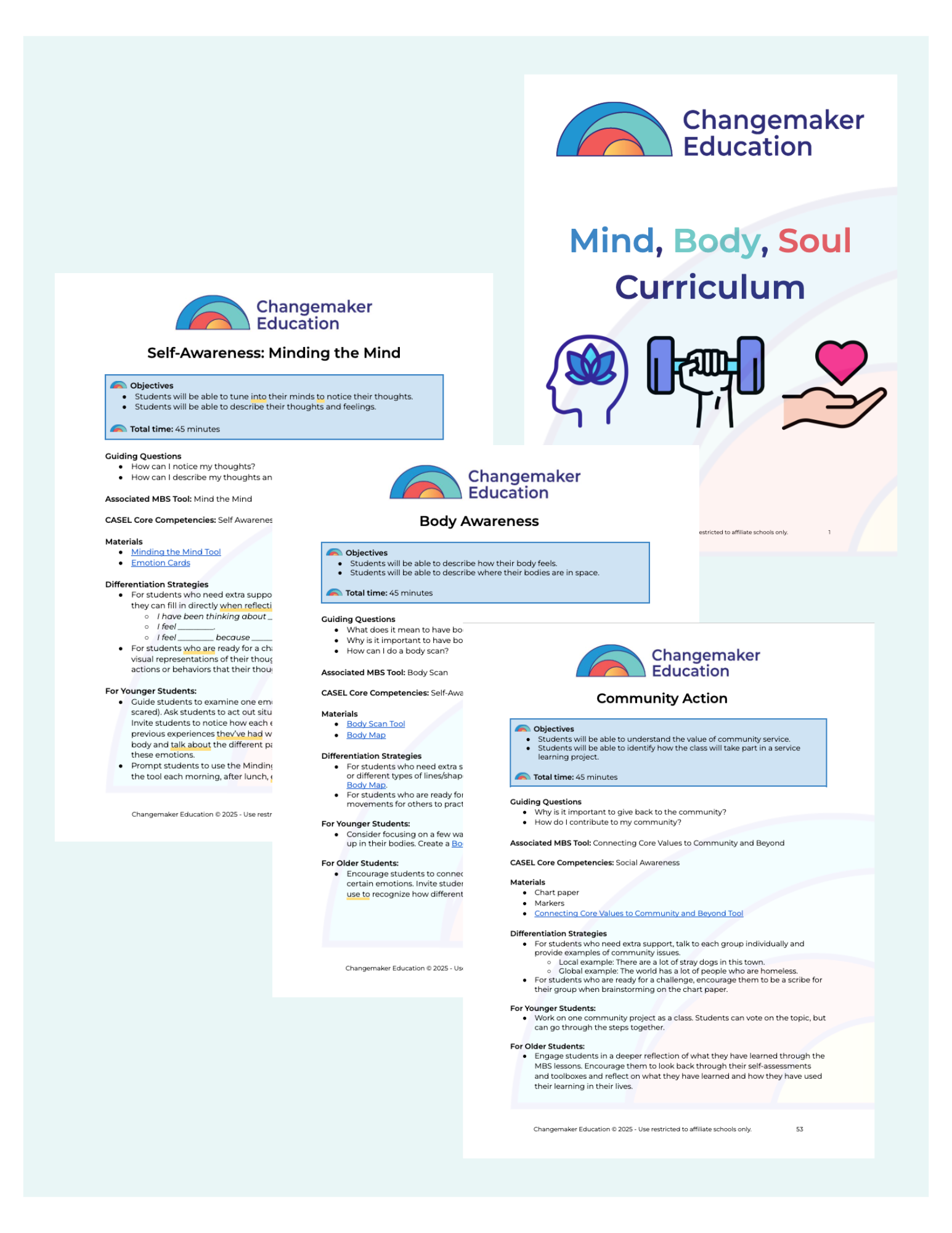
We also incorporated feedback and revisions throughout the development process.
What can you learn from this example?
A strong curriculum development portfolio does more than show that you can create a lesson. It demonstrates that you understand how to design learning experiences for a specific audience.
For your own portfolio, consider including a scope and sequence or a unit that demonstrates how you've differentiated instruction for different learners.
You might also include a brief explanation of how you revised your curriculum based on feedback. These details help employers understand your curriculum development process, not just the finished product.
Explore our Changemaker Education curriculum development case study →
3. Educate Station: Creating Comprehensive PreK-5 Learning Materials
Another important part of curriculum development is creating resources that other educators can easily pick up and use.
For our partnership with Educate Station, our agency developed curriculum across six subject areas for students in PreK through fifth grade.
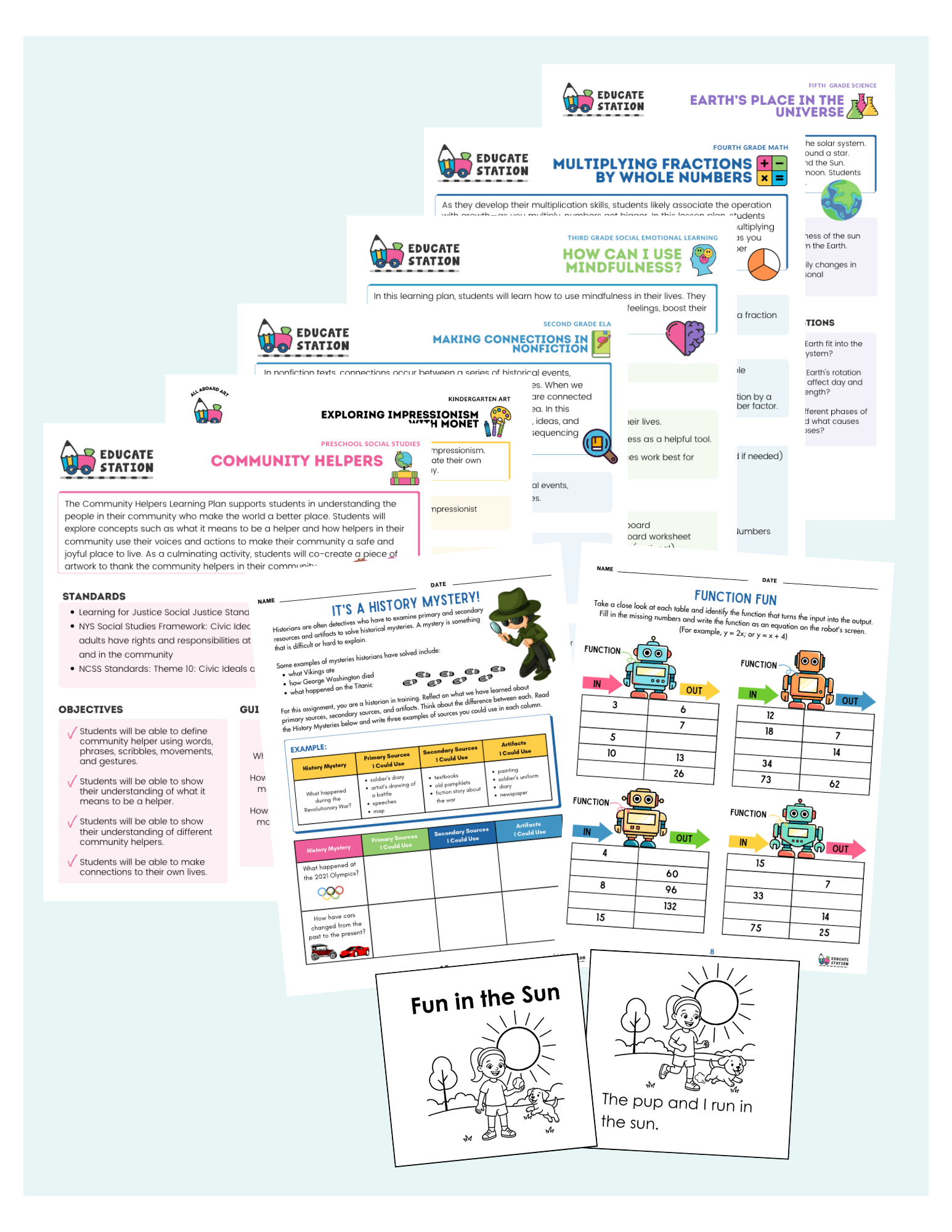
The project included learning plans, hands-on activities, worksheets, assessments, differentiation strategies, extension activities, and leveled readers.
The resources were designed for use in classrooms, homeschooling environments, and other learning settings.
What can you learn from this example?
If you're hoping to work with an educational publisher or EdTech company, think about how your portfolio demonstrates your ability to create materials for other teachers.
For example, you could include a complete lesson with teacher instructions, printable student activities, an assessment, and suggestions for differentiation.
The goal is to demonstrate that your curriculum is clear, organized, and ready for someone else to use.
Read our Educate Station curriculum development case study →
What Does It Take to Create Curriculum Like This?
One thing these projects all have in common is that there's a lot more happening behind the scenes than simply writing lesson plans.
Professional curriculum developers need to understand the goals of a project, work within specific guidelines, apply research-based instructional practices, and revise their materials based on feedback.
As a teacher or former teacher, you already bring so many valuable skills to this work! But learning how to apply those skills in a professional curriculum development setting takes practice.
That's exactly why we created our Curriculum Development Foundations program.
Designed to mirror the experience of working as a professional curriculum developer, the program gives you hands-on practice creating curriculum, personalized feedback from expert curriculum developers, and the opportunity to build polished samples for your portfolio.
You'll get to experience what the curriculum development process is actually like, practice applying your skills to professional projects, and receive feedback to help you grow and master skills as a curriculum writer.
Explore Curriculum Development Foundations
(You can also find more inspiration in our teacher-to-curriculum-developer success stories.)
Where to Host Your Curriculum Development Portfolio
Once you've chosen your samples, you'll need somewhere to share them. You don't need an expensive website or fancy design skills to create a professional-looking portfolio.
Here are a few options:
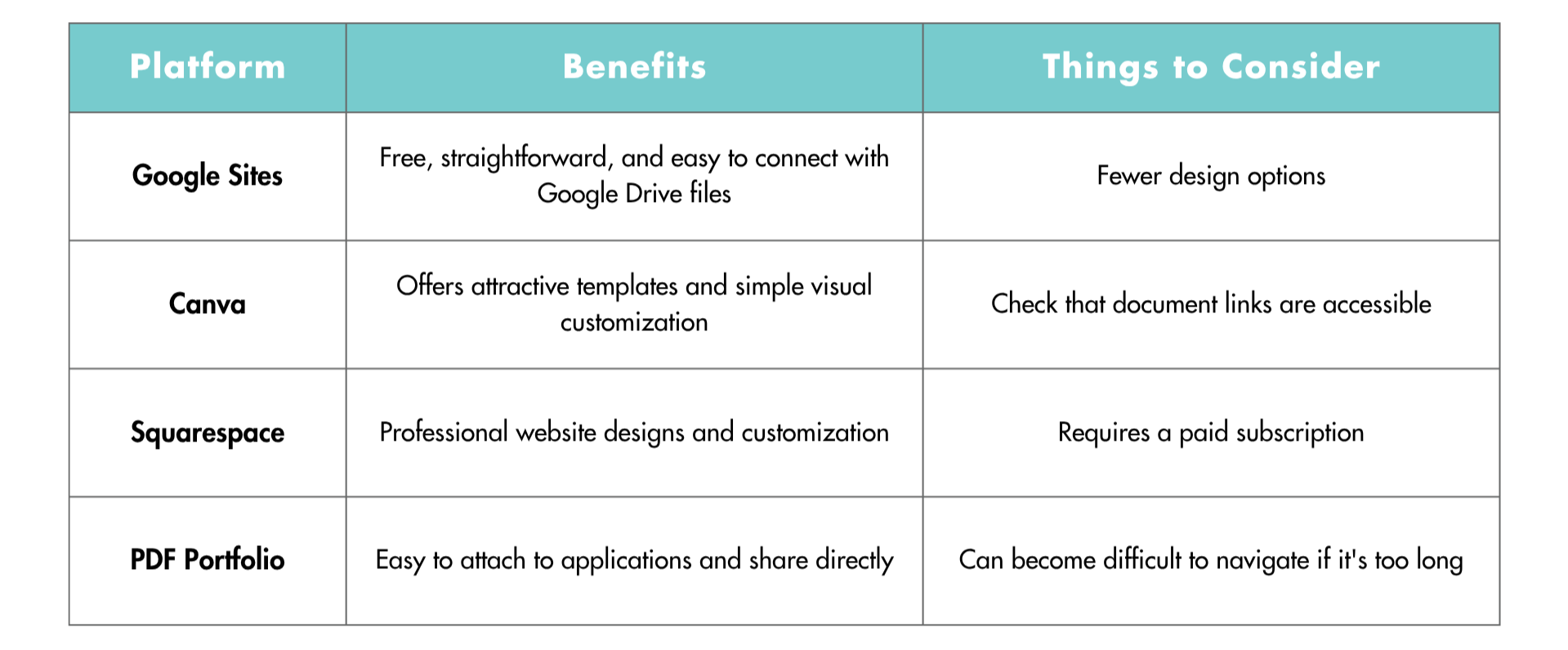
If you're just getting started, Google Sites or a well-organized PDF can work perfectly well. Choose whichever option makes it easiest for employers to view your work.
Once your portfolio is ready, add the link to your resume, job applications, and LinkedIn Featured section.
Portfolio vs. Resume vs. Writing Sample: What's the Difference?
When you're applying for curriculum development jobs, you might notice employers using these terms differently.
Here's what each one means:
Your resume summarizes your professional experience, education, and relevant skills.
Your curriculum development portfolio brings together multiple examples of your work, usually with descriptions explaining each project.
A curriculum writing sample is one individual piece of work that demonstrates your ability to create curriculum.
For example, an employer might ask for your resume and two curriculum writing samples. Another might request a link to your full portfolio.
Having both a complete portfolio and individual samples ready makes it much easier to respond to different application requirements.
Need help presenting your experience? Check out our resume tips for teachers and cover letter guide.
Common Curriculum Portfolio Mistakes to Avoid
Before you start sharing your portfolio, watch out for these common mistakes.
Including too many samples: A few excellent examples are more effective than a large collection of unpolished or repetitive materials.
Using too much classroom jargon: Make sure someone outside your school or district can understand your work.
Not explaining your instructional decisions: Don't just showcase the finished materials. Share the reasoning behind your approach, including the instructional strategies, research, or pedagogical principles that informed your work.
Forgetting to explain your samples: Always include some context about your goals, process, and decisions.
Forgetting to check your links: Make sure every file opens correctly and doesn't require special access.
One more tip: Be ready to talk through your portfolio during an interview.
Employers may ask why you structured a lesson a certain way or how you approached a particular curriculum challenge.
Ready to Build Your Curriculum Development Portfolio With Expert Support?
If you're excited about curriculum development but aren't quite sure how to create an effective portfolio and actually land curriculum development jobs (freelance, part-time, or full-time), Educator Forever is here to help.
Our 5-week Curriculum Development Foundations Program is designed to mirror the experience of working as a professional curriculum developer, so you can gain the skills, confidence, and hands-on experience to pursue opportunities beyond the classroom.
Through the program, you'll:
Gain valuable skills and real-world experience in curriculum development, learning how to approach projects using the frameworks, research, pedagogy, and best practices that guide high-quality curriculum.
Create professional curriculum samples that demonstrate your skills and can become part of your portfolio.
Receive personalized feedback from expert curriculum developers who know what education companies and publishers look for.
Practice reviewing and revising your work so you can strengthen your curriculum writing skills.
Learn exactly how to find and land curriculum development opportunities so you can start an exciting new chapter.
Have the opportunity to earn Educator Forever certification to showcase your skills and stand out to employers.
Instead of wondering whether your portfolio is strong enough, you'll have the opportunity to develop your skills, create standout work, and get guidance from people who actually work in curriculum development.
And you'll be doing this alongside a supportive community cheering you on as you step into this new career chapter.
Hear what educators are saying:
“The Curriculum Development Foundations Program was truly the start of a new chapter in my life. It made my career change possible. The program is so content-rich, practical, and supportive. I learned how to take my skills from the classroom and apply them in a new professional environment. I also learned how to apply for jobs in curriculum development, which was invaluable. I learned where and how to apply to curriculum agencies, which is how I got my first big curriculum project.” - Ashley R., Curriculum Developer
“I’m proud of how my portfolio resembles my unique interests and skills. It was daunting to create a portfolio at first, but Educator Forever guided me through the process, step by step… I now work as a Curriculum Designer for an education company designing elementary lessons that combine social-emotional learning, the arts, and literacy. Creating enrichment programs that foster creativity has been a dream come true.” - Carisma B., Curriculum Developer
“I've always loved creating worksheets and presentations for my class, but didn't realize it was an option for earning income until finding Lily and Educator Forever. Once I took the curriculum development course, I was very well prepared to take on my first project. From there, I took off! Since I began, I've completed over 20 curriculum projects, ranging from consulting to full curricula, and it's been an amazing experience. The course is very hands-on, and you build your curriculum portfolio from the ground up. You get guidance, an experienced curriculum coach, and real feedback to create a portfolio that lands curriculum jobs. ” - Samantha B., Curriculum Developer
Join the 5-week Curriculum Development Foundations Program to go from teacher to curriculum developer!
Frequently Asked Questions About Curriculum Development Portfolios
-
While not every employer requires one, many curriculum development positions ask for work samples. Having a portfolio ready can help you demonstrate your skills and apply for opportunities more confidently.
-
Aim for three to five high-quality samples. Choose pieces that demonstrate different curriculum development skills and are relevant to the jobs you're pursuing.
-
Your classroom experience is a great starting point. Keep in mind, curriculum developed for your own students likely needs to be adapted to meet the expectations of educational publishers, EdTech companies, and other organizations.
Before including classroom materials in your portfolio, consider whether they demonstrate professional curriculum writing skills, such as clear instructional design, standards alignment, and materials that other educators can easily implement. And of course, make sure you have permission to share them and remove any confidential information.
-
A curriculum sample is one example of your work, such as a lesson plan or assessment. A portfolio is a curated collection of several samples, usually accompanied by descriptions explaining your approach and skills.
-
Google Sites, Canva, and Notion are options for creating a free online portfolio. You can also organize your work into a PDF. Choose a format that's easy to maintain, navigate, and share.
-
You don't need previous professional curriculum development experience to get started! But gaining hands-on practice with the professional curriculum development process can help you create stronger samples and feel more confident applying for opportunities.
Consider developing a new curriculum sample that reflects the types of projects you'd like to work on. Getting feedback from experienced curriculum developers can also help you understand professional expectations, strengthen your writing, and create polished, portfolio-ready work.