
Episode 175: Designing High-Quality Learning Experiences with Mickey Fitch-Collins
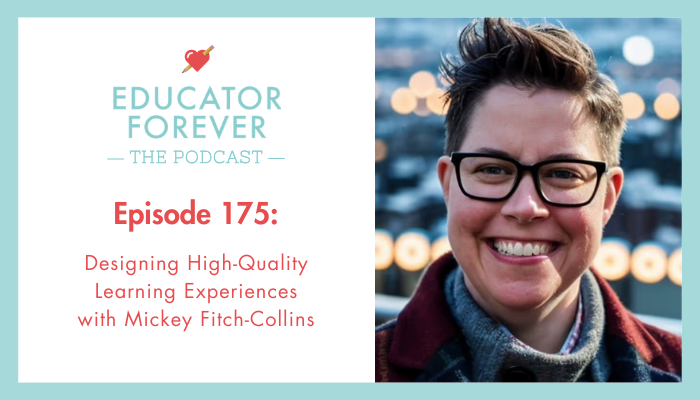
Mickey Fitch-Collins is a leadership development facilitator, coach and podcast host who turns research into real world impact. With a doctorate in leadership in higher education and a background spanning academia, Ed Tech and corporate learning, she helps organizations unlock the potential of their people, especially their middle managers.
In this episode, Mickey told me about how she went from professional bass fisherman to working in higher education to learning and development. She gets deep into her learning and leadership philosophies, and she provides some great advice for those wanting to transition from education to learning and development.
Topics Discussed:
The impact of 9/11 on Mickey’s approach to leadership
The need for learners to have a safe environment
Making space for experimentation
Resources mentioned:
If you’re enjoying this podcast, please leave a rating and review on Apple Podcasts.
Related episodes and blog posts:
Read the transcript for this episode:
Welcome to Educator Forever, where we empower teachers to innovate education. Join us each week to hear stories of teachers expanding their impacts beyond the classroom and explore ways to reimagine teaching and learning.
Mickey Fitch-Collins is a leadership development facilitator, coach and podcast host who turns research into real world impact. With a doctorate in leadership in higher education and a background spanning academia, Ed Tech and corporate learning, she helps organizations unlock the potential of their people, especially their middle managers. Mickey is known for blending scholarly insight with humor, storytelling and practical tools that make leadership skills stick. Welcome Mickey, so nice to have you here.
Mickey Fitch-Collins 0:27
Thank you so much for having me. Lily. I appreciate it.
Lily Jones 0:30
Absolutely. Well, I would love for you in whatever way, shape or form you'd like to take us through your professional journey.
Mickey Fitch-Collins 0:37
Yeah, yeah. So a little bit of a roller coaster ride, as I'm sure most people describe their careers that way. I tell people now I'm on my second career, okay? And so my first career, I'll actually go back about 30, in fact, 30 years to the mark, to when I was a teenager. I actually started out as a professional bass fisherman, which is kind of a strange sort of thing, like most Yeah, it is cool. Thank you. Yeah. I grew up in the far south suburbs of Chicago, which is not what most people associate with bass fishing, but I got into fishing, met the right people at the right time, and ended up kind of getting connected in the professional world. So like in the wintertime months, if you ever see like fishing expos and things like that that happen. There's all these different people that come together to market different products, teach people how to fish, all that sort of stuff. That was part of what I did. But I was considered, at the time, the youngest professional bass fisherman. I was a girl. I was from the northern states. This is a predominantly southern male sort of sport, and I, you know, was doing very different things on the weekends that most of my friends were doing.
Lily Jones 1:43
I bet.
Mickey Fitch-Collins 1:44
Yeah, yeah. But what, what I realized in that process, what, what happened was I loved I always loved teaching. I always loved kind of helping people become better fishermen. I was in these rooms with mostly men that were two or three or four times my age. And I did that, and then transitioned into college, right? Because I was doing this and I was in high school, and, like, my high school was cool with me, like traveling around and missing time. This is kind of pre internet a little bit, so it was kind of like a little bit of correspondence, sort of school. But got to college, and as it turns out, you know, college professors want you to be there in person. And so I had to kind of sunset the fishing stuff a little bit, and consider myself to be a person who colored outside the lines a little bit in college and became a student leadership, you know, student leader in air quotes, right? Because I was kind of gathering people for the wrong reasons. If you can pick up what I'm saying there.
Lily Jones 2:33
I understand.
Mickey Fitch-Collins 2:35
Yeah, but then I became an actual, codified student leader, and the second week of my time as a student leader was 911 and we all for, you know, any of us that are obviously older than you know about 25 all have our own student you know, have our own 911 story. And for me, that experience massively changed what I thought it meant to be leading and to be a leader. And I absolutely changed my trajectory from at the time, yeah, I was a psychology major. I was thinking, Oh yeah, you know, I'm going to become a therapist. I was kind of thinking about maybe going into corrections, and then I realized what I wanted to do was I loved being able to help my peers in this college environment. And I had a couple of people kind of tap me on the shoulder and say, Hey, Mickey, you know that you can actually do this as a career, right? And I'm like, Huh? And they said, Yeah, all of these people around here that aren't faculty, like, we're all here is our career, like, you can help do all this student support function and everything. And so I went on and got my master's degree in counseling and student personnel, and ended up working in higher education for the next 20 years, all the way from kind of front lines and residential living and student support all the way up to the C suite on the chancellor staff. And then 2020 came along, and within everybody has, you know, the other stories we have right within about, you know, plus or minus two years period of time of 2020, I had gotten married, finished my PhD, turned 40, had our first child, and the pandemic happened. And you know, couple of things going on, right? And I started kind of realizing that, not kind of, but I focused my dissertation research on burnout and middle managers, and I realized I was my subject matter. And I started looking around and I realized, you know, I'm spending more time behind closed doors fighting with my peers for resources than I was doing anything to actually help students be successful. And I was super burnt out, super unhealthy, all this sort of stuff. And I was like, I don't think I want to do this anymore, but I had never done anything but that, right for 20 years. And so I started, I kind of went through this discernment process Lily. And I was kind of thinking like, Okay, well, what is it that I like to do? What are the experiences, right? Like, one of those kind of career audit sort of things that we do? And I realized all the way back to the fishing stuff. I love to teach. I love to help people learn. I love I'm one of those weird people that loves public speaking, all of this sort of stuff. And I was like, oh, learning and development, corporate learning and development. I could get a job. Who knew right that I could get a job actually being in a function to help other people build their skills. And so that's what I do today. I work for an organization called learn it. And what we do is, I we help people upskill themselves, kind of build the human advantage in the age of AI. And so I my short line that I tell people all the time is my job is to help other people get better at their jobs. So that's kind of the quick, like five minute version of where I find myself today.
Lily Jones 5:39
So interesting. And I love how there are these, like, seminal moments of where things changed for you, or the reflections. And I think I would love to hear more, just even going back in time, you know, you said with 911 that changed your view of leadership. Can you talk a little bit more about that? Like, how did it change?
Mickey Fitch-Collins 5:57
Yeah, absolutely, yeah. And, you know, I mean, like, a lot of college students, you know, went to school, and I'm like, I loved, I've always loved school, and I did well. Had lots of friends, big social networks, all this sort of stuff. And I was like, Yeah, I'm going to become one of these student leader people, you know, gets me a free room on campus. This is going to be awesome, right? And I had gone through this training process, and, you know, it was like, how to put on a successful program, and how to get people to, you know, show up at things. And I kind of at that point, kind of was thinking, like, my job is to, you know, rip your float parties. And I live in Wisconsin, so it was like, gather people up for Green Bay Packers games on Sundays, like, you know, kind of these social sort of things. And then 911 happened. And, you know, like most everybody those first couple of days, everybody's kind of looking around being like, is this going to happen again, right? And, you know, I mean, I am. I was a kid when Desert Storm and all of those things happened, but that was a thing that happened on TV, right? Like that didn't, I mean, yeah, you tied the yellow ribbon around the tree in the front yard and stuff, but it didn't feel real to me as a kid. And then here I am as a 20 something, and I'm trying to figure out, how do I sit with my peers? Like literally, there's nobody has an answer. Nobody knows what to say to one another. And of course, you know, we didn't have the we didn't have classes for a few days, and then it was like, you know, we're kind of looking to our boss, being like, what do we do? And he's like, there's no, there's no playbook for this other than and what I what I can put my finger on now, is your listening skills, like just kind of asking people, being with people, being empathetic, listening to other people, as as people started realizing, you know, lost friends and family members and, you know, near miss sort of things and stuff, I realized my job wasn't, how many people can I get to come to this fun program? Where do we do these crazy things in the residence halls? To my job is to help be with other people, right? And to help us figure out, not only how do we cope, but how do we be successful in light of this? Because the other piece to it too was that I, you know, I think that my my grouping of peers that were going through college at that time, you know, I had a lot of friends that had signed up for kind of the Army ROTC sort of program as a great way to finance college, right? You do this thing, you're going to do this physical training, this is going to be a great way to pay for college. And then all of a sudden it was like, That turned into National Guard stuff, which turned into mobilization. And it was like, Well, hang on a second here, like you're leaving school, like, can that just that's happening, that's happening in three days, you know. So it was this huge shift of, you know, I mean, we use those phrases colloquially and stuff, but like, the age of innocence was over with and and I realized that my my call to action as a leader was to just kind of do what I can to help be with other people. And that's one of the things I lean on to this day, even 25 years later now, to my skills, my abilities to just kind of listen to people, stem from that.
Lily Jones 9:09
It's so simple and so beautiful too, because I think it's what we all need, right as humans, we want to be seen. We want to be listened to. And that kind of leads me to my next question of how you've blended together leadership and now learning and development. And to me, you know, being a full learning nerd, like so much of learning, is listening to people and being there alongside them as they're going through their own process of learning. So I'd love to hear from you, kind of how you blended these two worlds together.
Mickey Fitch-Collins 9:37
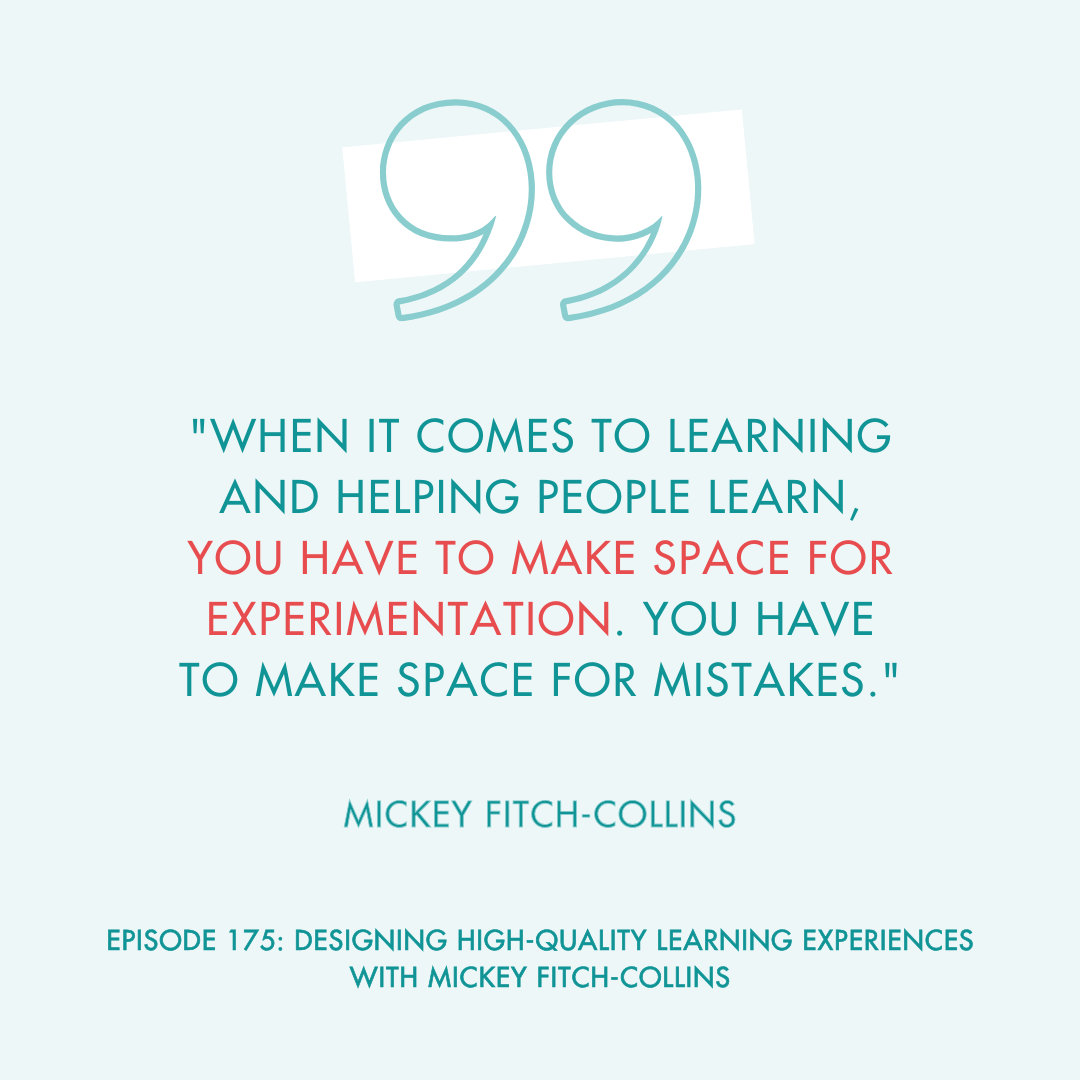
Yeah, I you know, what I realized is, and part of this, I think, as a function of just kind of getting older too, but is the transferable skills from career path to career path are very clear, right? And these, these human skills of whether it's listening, whether it's empathy, whether it's managing through conflict, super. Revising other people. You know, that's not field or job specific. That is the nature of human beings, right? Is every workplace is going to have all of these skills that are going to be necessary in order for those individuals and those teams and those organizations to be successful. And so what I realized was, as I moved, as I made this transition from formalized, you know, kind of working in higher education administration, to now being in this kind of learning and development function, is that number one, working in higher ed allowed me to kind of Jack and Jill of all trades, right, of like, doing a little bit of everything. But now what that has helped me do is, is it, as I teach these skills to other people, is I have a story for everything, of like, let me tell you about this time you know, um, and that's what you know. When it comes to learning and helping people learn, you have to make space for experimentation. You have to make, you know, space for mistakes. You have to make space for people to say, I don't get it. I don't understand I don't see the relevance. I don't see why this is important, right? And that was the same thing I was doing with college students. It's just now I work with adult learners in a different capacity.
Lily Jones 11:19
Yeah, so interesting. I mean, it's really supporting people along their own path in both ways. And so I know you mentioned a little bit about your work at learn it, and I know you host a podcast too. Can you tell us more, kind of about your day to day at Learn It. What's your job like? What do you do?
Mickey Fitch-Collins 11:34
Yeah, yeah, for sure. Yeah. So learn it as an organization, we've been around. We just had our 30th anniversary last year, so we've been around for a long time. We're based in the San Francisco area.
Lily Jones 11:37
So am I.
Mickey Fitch-Collins 11:42
Okay, as you can probably tell from my accent, I am not. Sorry. I am a remote employee. I live in northern Wisconsin, but I... our job, our mission, is to help people continue to upskill themselves and organizations, kind of the idea is that companies grow when their people do and what we do is we spend time kind of building up these human skills to really, especially, again, in that phrase, you know, in the age of AI, kind of where we are right now is all of us are building AI skills, and we also need to be building those AI adjacent skills, things like problem solving, decision making, critical thinking, you know, discernment, all of this sort of stuff. And so what I do every day is I facilitate virtual workshops on all of these different topics. We have about 60 different topics to a variety of different industries and organizations throughout mostly the US, but we have clients all over the country, and it's fantastic because I get to interact with people that I never would have met before, in places that I've, you know, never seen, never been anything like that. I do get the opportunity to do in person workshops, which is fantastic because I'm a bit of an extrovert, so I like being able to go in person and spend some time with folks. And yeah, I do. I do. Also host a podcast. It's called the Learn it lounge, and it's designed for learning and development folks and HR talent management folks. We kind of talk about the science and the business of learning, and how do we create learning cultures within our organizations.
Lily Jones 13:17
I love all that. I mean, you're speaking my language.
Mickey Fitch-Collins 13:22
You're due night,
Lily Jones 13:23
Yeah, exactly. I started off as a kindergartner, first grade teacher, then went into curriculum design, you know, for the past 15 years or something. And then now I went back, and I'm getting my doctorate in learning design. So really thinking about, you know, and then I run educator forever, where we have adult learning experiences, right? So just really, I love thinking about learning across ages, like learning is something, as we all know, that doesn't just happen in schools, it's something we're doing all the time. And so your work is so interesting to me, and I'd love to hear from you what you think high quality learning experiences must have.
Mickey Fitch-Collins 13:56
That's a big question, well, and you know, and as you were describing your journey too, I mean, one of the other things that I always share as part of my journey too is, I'm also a mom. I have a five year old and a two year old, and it's so fun to me, especially with my five year old, to, you know, she's in she's in 4k and to be hearing about her learning experiences and kind of how she's learning and growing and experimenting. And then, you know, my wife and I always share with her, of kind of like, this is how we're learning and growing, so you're absolutely right, of like, how we model that across the lifespan, I think is really important, especially to our little ones. But your question was about, kind of, what, like, ingredients of high quality learning experiences. And there's a few things to me that I think are absolutely essential. The first one that comes to mind is psychological safety, meaning that people need to feel like they are in an environment where I don't know is an acceptable answer, or I'm not sure where mistakes can be. Made without repercussions, without people you know, making fun of you or teasing you. Where people can experiment, right? Like, the best learning is where we can experiment and say, like, well, let me try this on. Let me see if this works. Let me see if that works, but without any fear that people are going to judge them, or that there's going to be retribution, or, Oh my gosh. Like, if I don't know this, this is going to show up on my performance review or something like that. So I think psychological safety kind of a space where people can play, okay, yes. I think one of the other core ingredients to a high quality learning experience is that we have to build, and I was just having a conversation earlier today with somebody about this, we have to build in space and time for people to be able to reflect and experiment, right? So I talked about experimentation in terms of psychological safety, but one of the things that that I see sometimes with some of the organizations that that I work with is that people do this, this learning experience, and then maybe the managers are like, well, how come their behavior hasn't changed? Like, you know, it's been a week, right? You know? And it's like, well, people need time, right? Like, we need time to try things out, to warm up to ideas, to experiment, right? And so we need to have these, these moments where we can build and we can reflect and we can iterate, which I think is really missing in a lot of organizations. There's this, you know, if you recall that scene from The Matrix, you know, Keanu Reeves gets plugged in, and then he unplugs and he says, You know, I think it's, I know, Kung Fu or something like that. You know, that's not how learning happens. And we need to be able to experiment a little bit, right? The other thing that I think is probably to me, kind of the third core ingredient is relevance, answering the question of what's in it for me, or why, or where does this fit into my world. There's learning, for a learning sake, which a person like myself, a person like yourself, we all would just like to learn this stuff. But in our work context, for the most part, we want to know why we're learning something kind of what is the purpose? How does this fit together? How does this help drive us forward? What is this going to get me right? What is this going to allow the organization to do? And I think that's reflective in our personal lives too, is that when we're learning something, generally speaking, we're learning because there's some type of demand, right? Like, I have to learn how to fix my dishwasher, you know? I have to learn how to fill in the blank, right? In the workplace, sometimes it's a little bit harder for us to pinpoint. I need to learn this because of that, right? And so we need to be able to as managers and as facilitators, we need to be able to tell the story of relevance.
Lily Jones 17:47
So interesting. I mean, I think that relevance piece too, in the classroom, you know, and for adults too, it's so connected to being having some degree of agency, right, being able to choose your own path in some ways, with some guardrails, right? Workplace too, right? Like, sometimes there are more or less opportunities to do that, and more or less opportunities to be flexible. So, like, how to have buy in when maybe there isn't a huge degree of agency, you know, can be a bit of a puzzle.
Mickey Fitch-Collins 18:16
Yeah, yeah. I mean, it's, you know, whether we're young or old, you know, very few humans like being told what to do, you know. But we, we like to know. I mean, you know, we operate, to some extent, in a system of risks and rewards, right? So we need to know, kind of, like, what those two guardrails or those two ends of the continuum are. But we also want to know, I think, especially as adults, we want to know that, like, if I'm going to put the time and energy, physical resources, mental resources, financial resources, time research, whatever it is, if I'm going to put in I want to know I'm going to get out right and and I think especially in the economic times that we're existing in and our organizations, I think a lot of us are Looking, or a lot of people are looking at learning saying, is this going to give me an edge? Is this going to give me a greater degree of job security? Is this going to open me up to additional possibilities in the future? Right? So there is, to some extent, we have to be able to answer other than the altruistic, like, it's good to learn, right? It's great for us to continue to grow and develop ourselves. We need to be able to communicate to people. Here's, here's what the receipt is going to look like. You know, on the other end of that, other than just, isn't it cool to learn, right? Like that only works for some folks.
Lily Jones 19:33
Sure, yeah, no, that totally makes sense. I think there's like, also an identity component too, of who you're becoming, you know, through the learning, which is easier sometimes to lean into than others, but I always think about that with learning experiences too, like, what does this learning help me become as a person?
Mickey Fitch-Collins 19:50
Exactly, exactly.
Lily Jones 19:52
So a lot of our audience are teachers, and they're looking to do work either in addition to teaching beyond the class. Room, or maybe transition out of the classroom and do something related to learning. Do you have any advice for them?
Mickey Fitch-Collins 20:06
Oh, do I ever. Yeah, you know, it's funny, because I find myself I in a lot of these types of conversations. I mean, particularly because I come from the world of working in kind of colleges and universities, I have a fair number of people that reach out to me, of like, you know, wanting to kind of make that transition or move away from formalized, you know, higher education. But the advice that I would offer to people, there's a couple of different things. First is to recognize, I think, education is the ultimate equalizer in terms of the experience, right? Like it is. It is the thing that allows us to be on different levels and different playing fields. I think the same thing comes when you think about career and job of what educators do, right whether, whether it's a kindergarten teacher, whether it's a high school teacher, you know university, you know anything like that is you by the nature of what you do, you have a skill set that is incredibly broad in comparison to a lot of other industries. And I see this. I saw this in myself. I see this in other people, is that you're if you start listing out those kind of general categories or skill sets, change management, leadership, conflict management, right? Like you do all of these things, and a lot of people don't necessarily recognize like, all of that sits in the world of being an educator. And so the the number one thing that I would tell people to do is to make a list of your skills and your impacts. Like, where have like, what type of impacts have you made to the organizations, and then put that in language, and this is kind of the number two piece, is to put that into language that non educators will understand. This was one of the things that was very difficult for me when I made that that understanding from that discernment process of like, I want to leave higher education. I went out. I partnered with a fantastic and I continue to refer people to her all the time, a fantastic career coach, because I'm like all of this language, I am not getting a peep of response from anybody. And she said, that's because this is all higher ed education language. Nobody understands what this means outside of the education environment. People Inside Education absolutely understand all the things very complimentary to you, but if that's not where you're trying to go. So so I think I would recommend to folks is, is to list out those skill sets, list out what impacts that you've made, and connect yourself with with a career coach or a resume coach that can help you, essentially, kind of translate your Latin to something that is understandable by the industry or industries that you're thinking about working in, so that people essentially, it's an opportunity for you to learn how to storytell in a different sort of way.
Lily Jones 22:56
That's great advice. Yeah, it can be hard, because especially, you know, if you've been in this environment for so long, and you're around other educators, and you just kind of think it's how we speak. I always give the advice, like, give it to somebody else that you know, who's not a teacher you know, like exactly your application, to a friend who works in a total other industry, and see if they can understand what you're saying. Yeah, you realize all the acronyms and things like that that we're throwing around.
Mickey Fitch-Collins 23:19
For sure, and you know, and the fantastic thing now too, is use AI as as a tool to be able to help you do some of that translation, right? And because you can set up, set up personas for yourself, you know, whether it's a, you know, custom GPT or a gem, or, you know, whatever that is, set up a persona that, like you are a hiring, you are a recruiter at this type of industry, this type of sector, and, you know, look at this resume and tell me what you don't understand, you know, tell me where there's colloquial language, whatever it is, essentially, kind of set it up as a bit of a contrarian and a critic, you know. And then it'll pour some light on those things where you don't even realize that you're using kind of insider language.
Lily Jones 24:00
Oh Yes, absolutely. Well, Mickey has been so nice talking with you. Can you tell folks how they connect with you?
Mickey Fitch-Collins 24:07
Absolutely, yeah, the best way to connect with me is LinkedIn. So if you go to LinkedIn, you just search for Mickey Fitch Collins, please check me out there. That would be the I definitely welcome people to get connected. Send me a message, comment on stuff out there. I am one of those folks that I love being in relationship with as many people as possible. So if there's something that I can do to be helpful to folks, or if there's something that I've said that piques people's interest, connect with me there. The other thing that I would love to tell people about too, is, if you're interested in, like, what I shared with you about learn it. We are offering a free 45 day no holds bar, sort of trial period for you and up to 20 teammates at any organization. So you can just go to learn it. So that's L, E, A, R, N, I t.com, forward slash, Mickey, you'll see, you'll see my podcast information there, but then you'll see that too, that you can sign things up and you can you and your teammates can take classes. You can check out our workshops. Kind of see what you think and see if we're going to be a fit to help you in your organization.
Mickey Fitch-Collins 25:08
Wonderful. And we'll put all this in the show notes too. Thank you so much.
Mickey Fitch-Collins 25:08
Awesome. Thank you.
Transcribed by https://otter.ai