
Episode 178: Supporting Students with Visual Dyslexia with Hillary Summerbell
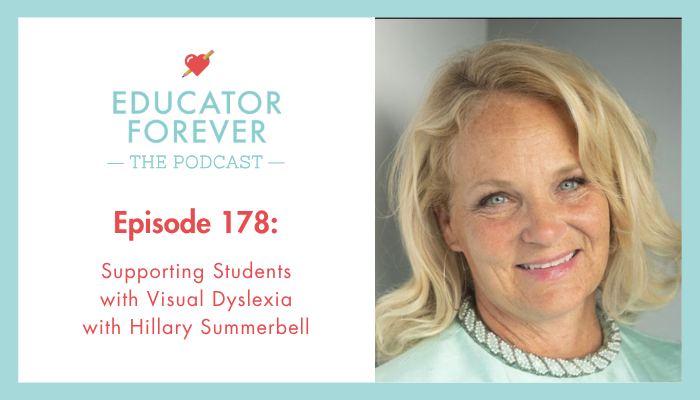
Hillary Summerbell is the founder and CEO of Summerbell, a literacy technology company redefining how visual dyslexics engage with text. A fourth-generation Washingtonian and lifelong creative, Hillary brings a designer’s eye and an inventor’s persistence to the world of EdTech. After a career in interior design and entrepreneurship, Hillary built on the academic research of positional arc reading and elevated it through technology, creating Summerbell. Her work has delivered measurable gains in reading fluency and comprehension, transforming an academic idea into a tool used by students, parents, and educators nationwide.
Hillary and I talk about her visual dyslexia and how it influenced the creation of Summerbell, which reformats text into an arc for easier comprehension. She gets into the challenges of developing Ed Tech and how teachers can best use Summerbell with AI.
Topics Discussed:
Teaching herself how to read
Having John Hopkins assess Summerbell
The challenges of introducing innovative teaching strategies
Resources mentioned:
If you’re enjoying this podcast, please leave a rating and review on Apple Podcasts.
Related episodes and blog posts:
Read the transcript for this episode:
Welcome to Educator Forever, where we empower teachers to innovate education. Join us each week to hear stories of teachers expanding their impacts beyond the classroom and explore ways to reimagine teaching and learning.
Hillary Summerbell is the founder and CEO of Summerbell, a literacy technology company redefining how visual Dyslexics engage with text. As a lifelong creative, Hillary brings a designer's eye and an inventor's persistence to the world of Ed Tech. Everything changed when Hillary discovered she could read more easily when text was in a soft curve, mirroring the circular form she took notes in. For the first time she could read fluidily, comprehend deeply and truly enjoy what she was seeing on the page. That moment sparked a calling to make the same experience accessible to others. Welcome Hillary, so nice to have you here.
Hillary Summerbell 0:34
Thank you, Lily. Nice to be here too.
Lily Jones 0:37
Well. I would love for you to start in whatever direction you'd like taking us through your professional journey.
Hillary Summerbell 0:44
So really, I mean my profession, prior to discovering Summerbell, was as an interior designer, and I went into art because I was not very good at school at all. So art was the one place that I found that I excelled in really because I really struggled through the like the normal academics and elementary school and junior high and high school, because I was dyslexic and I didn't I couldn't really comprehend linear text very well because I never really learned to read phonetically. Basically, if I couldn't decode words. I didn't really I was not a fluent reader, so I just didn't do very well at school at all, and that was really the major reason that I'm here today. What I ended up doing was pivoting to art, because that was a place that I was successful in, and I'm became an interior designer. I realized early on that if I didn't work for myself, that I probably would get fired because of all my, you know, mistakes. So I opened up my own studio. We started in Vienna, Virginia. Did? We were in Bethesda, Maryland, for a long time. And really it was the creative I was. I was very creative, and so I just focused on that and and built a career doing that. So yeah, design, art, landscape, party planning, event planning, anything that involved me having a vision, and having to execute that vision became my profession. So it was, it's, it was a good ride, but now I'm on to bigger and better things. I'm so excited to introduce Somerville to the world, and you know, that is my full time job now, primarily, you know, and I didn't really expect to do the big pivot, but when we got so much positive feedback about the project, and then when the Johns Hopkins School of Education for research and reform did an evaluation on Somerville in the fall of 2024 and we have such a great report, I decided to pivot. And so here I am today, just trying to tell the world about Summerbell and how it can help others.
Lily Jones 3:10
Well, congratulations. It really is a huge accomplishment, and I would love to talk a little bit more about that pivot. First off, maybe just an overview of what Summerbell is, but also, as you go through it, I would love to hear just why you developed it, or how it even became an idea for you, sure.
Hillary Summerbell 3:26
So I developed it, kind of by accident, out of frustration as a visual dyslexic, I just decided that I had to teach myself how to read because nobody else was able to do it. And because my life, I guess you would say, you know how they say you're a master after 10,000 hours of something, whether you're a sculptor, writer or chef. Well, I became a master at design, and one of the skills that I learned was you take away what doesn't work. And when I was decided that I needed to teach myself how to read, I decided, well, I needed to take away what didn't work. And what didn't work for me was linear tax. That was really the beginning, and I really didn't, I mean, I did it on purpose. I had a full intent and to help myself, but what it ended up being like, you know, this arc, you know, the reading that's behind me. I didn't actually know that that was going to be the end result. I just knew that I could read in a spiral, and I didn't have to turn the page. So and I and I realized also, because I drew all of my I drew what I wanted to see, and since I couldn't, so I started like making drawings of writing that went like in the arc. And then I realized it. It actually slowed me down when I read. So I was much, it was much easier for me to comprehend the text. And I just was like, wow, this is so weird and so easy. And how can this be? And, you know, it was all of those questions, because I, I didn't. I hated, I hated everything about computers, I hated every you know, I just would hire people to read for me and send my emails and run my business. So it really was a big deal when I figured it out, because it's instant. I mean, the thing about Summerville is it's, you know, I kind of made it for visual Dyslexics, right? I mean, I'm a visual dyslexic. I solved my own problem, right? So it was, the result was so profound in my comprehension, in my self confidence, that I just made a pledge to myself that I wouldn't stop developing it, or, well, really developing it. The idea was, you know, the idea happened six years ago. I wouldn't stop developing, developing it unless I hit like a huge wall, you know, like a wall that you couldn't get through, like the wall, you know. Let's say, you know, it didn't work well, then I would stop, you know, but it does, so I didn't stop, you know. And then we applied for a patent, and we got a patent. So that was good, you know, then we have school districts that are interested in using it. So that was great. And then we developed software along the way. I told my software guys, I was like, I want, I want to, like, first it first it was a screenshot, then it became a website in a Chrome extension, and the Chrome extension was used in the study with Hopkins. And now we have developed a browser that you can purchase on the app store, and you can read anything on the internet in Somerville, you know, anything web based in any language, so you like it.
Lily Jones 7:03
Yes, I love it. I love it, and I love hearing about how it was, but done first off from a challenge that you had when like a real need, right? And I think that's often how the best ideas are born, like through our challenges, through our struggles, and then realizing that whatever we come up with might be applicable to other people too.
Hillary Summerbell 7:23
That's right.
Lily Jones 7:24
I also love how you just described all these little steps you took. Because I think sometimes people start off and they're like, Oh, the idea of starting a whole new venture like that feels overwhelming, but you're like, I'm just gonna try it, step by step until it works, or it doesn't work, until a wall comes up.
Hillary Summerbell 7:40
I mean, that's really was that, you know, every day I just moved the needle, you know, because I was working full time in design, and I just, you know, I was, whether it was a phone call or, you know, anything, it just, every single day, just moved the needle. And, you know, before you know it, that's how you build a business. You know, for those entrepreneurs out there, that's how you get stuff done, is you just do it a little bit every single day, yeah, and it's an exciting journey. Oh my goodness, it's been amazing to be on this journey. Yeah, we're writing a book, too, and that's really cool too, because when we publish the book, we're going to do the when you open up the book, it's going to be in linear, and then you turn it upside down, and it's going to, I'm going to, we're going to publish the whole thing in Summerbell.
Lily Jones 8:31
so cool, awesome.
Hillary Summerbell 8:34
It's my story. Yeah, ain't that cool? Can you imagine a book in Summerbell? Oh, I'm excited. Yeah.
Lily Jones 8:42
So great. That's so great. I also just wanted to highlight one thing you said, just using your design background and making this transition of taking away what doesn't work. I wrote that down, as you said, and I was like, gotta write it down, because I think it's so simple but so powerful.
Hillary Summerbell 8:56
Yeah.
Lily Jones 8:56
Take away what doesn't work like, let's do it right. Where does that leave us next?
Hillary Summerbell 9:01
Yeah. I mean, that is the basic rule of design, you know. And even in the garden, I was in the garden this morning, and, you know, and there was, like, a couple bushes that I don't really like and, and I was like, you know, what, you know, take them away, cut them down, like, whatever I want to. I'd rather do a sunflower garden there, or whatever, you know, but why? Why keep trying to some people, well, I don't know, some people call it putting lipstick on a pig. You know, have you ever heard that we just you beat your head against the wall, and you keep trying to do the exact same thing. But, you know, it doesn't, if it doesn't work, it's an it's insane. And, you know, I know that. I think one of the main things that's so different about summer, about compared to what's happening now in the and, you know, in this space, in this dyslexic space, is, I believe it's a visual problem. That's a big that's a big deal, right? But you, if you read our study, yeah. In our evaluation, you will see that really the only thing that we did is we reformatted the text in the arc.I mean, we didn't. The curriculum is not different. There wasn't a different way to I mean, we have the word helper that chunks words vertically. But you know that I did not invent this, like massive curriculum. I invented a software that takes linear tax and it puts it in a customizable arc. So you can, you know, you can do it to whatever your preference is individually. You can customize the whole experience. I mean, you can already do that on the computer, but to be able to do that in the arc is pretty cool.
Lily Jones 10:40
So talk to us a little bit more about that positional reading arc. How did you discover it?
Hillary Summerbell 10:46
Well, so actually, I did not discover positional reading arc. I discovered the software. I discovered Summerbell. So there is, there was a gentleman that did some work. But what he did is he had, like, the students have a book, and you're like, you're reading a book, and you go, boom, boom, boom, you know, like an archery thing, and with some great results. So that's actually why Hopkins called me, because they had seen this article, and then, you know, but then, by accident, you know, Summerbell was able to be, you know, it's, it's, it's different, but it's kind of the same some way, you know, it's very different because we have consecutive lines of art reading, right? But really it's the software that makes it unique and novel. So, yeah, so it's really taking my idea and then implementing it into a software which is, yeah, which is why Summerbell is unique.
Lily Jones 12:00
So interesting.
Hillary Summerbell 12:01
Yeah, right?
Lily Jones 12:02
Absolutely. I mean, talk to us a little bit more about the experience of being a visual dyslexic, and a lot of our audience are teachers. Oh, really, any advice that you have for teachers in helping students?
Hillary Summerbell 12:15
Yeah. Well, I honestly says, summer belt.com, that's our, you know, that's our website. If you go to our website, we really, we really went a long way for the teachers. We really want to make it a low lift so you guys don't have to be burdened to, you know, to use summerbound The classrooms. So basically, it's super simple in the beginning, when you show it to your students, you can show it to them digitally through the Chrome extension. You can print out you can it has a writing tool to the kids. Can type in it and then read it. There's the word helper that helps you decode the multi syllabic words. So I guess the main thing I would love to say to the teachers, if you feel like you, you're working with a child who's struggling with reading, right? And you're not exactly sure what's going on. Because, you know, I know that that's a very complicated process and stuff, but if you simply try it, if you put it in front of the kids, right, either hard copy or digital, and you just give them some time to kind of, you know, look at it, check it out, kids are going to either go, wow, oh my god. I've never seen this before. This is amazing. This is so much easier. And that's of course, you know, they're probably visually dyslexic, right? They like it because it's a visual dyslexic tool, according to Hopkins, right? So, and if they hate it, then they're not visual dyslexic. Probably there was some other they have some other stuff going on. So I would say to the teachers, try it on the kids, and if they like it, what I would recommend is having the kids. And this also would go for the parents too. Our browser is compatible with AI, which is so cool, right? So you can do small reading sessions. So you can say, you know, Mr. Ai make, you know, do a for like, a third grader. Just say, give me a 15 minute reading session for my, you know, eight year old kid, you know, or something like that, you know. Or if, depending on what the reading level is, where they feel comfortable, and then they'll produce it, and then the child just reads it, you know, and you, let's say you read it for like, 15 minutes a day, you know, it's, I mean, it's a practice, right? Because, just like reading, you have to practice because you want, you want things to change in your brain, right? But I believe that, because it's a visual problem, it's actually the right side of your brain, not what everybody else thinks. Which is this, you know, language processing thing, which is why Sommerville is so unique, our approach, our theory, my theory, let me say my theory, is very different. I don't think there's anything wrong? I don't think you have to remediate for, you know, for a visual dyslexic, if, if they like it. I think we just simply have to reformat it and let the data speak for itself. You know, the kids like reading it. You know, track them. You know, what did the Somerville intervention see what they think? You know, talk to them. Is it easier? Is it reading more enjoyable? You know, ask them questions after they read a passage. You know, you can, you know, linear or arc. And so it's really can become a little bit of a diagnostic tool. The thing is, if the child loves it, right? If the child is like, Oh yeah, I would much rather read 15 minutes a day and this, well, yeah, do it. Let's do it, right? And so then what happened, which I was, I'm really excited about, was when we did, when they when we did the evaluation we've used Acadience. Acadience is, do you know Acadience standardized? Yeah, okay, you know what it is, right? So, all the kids had Acadience, or we used Acadience. We're testing Acadience. They read in Summerville, I think it was like 15 to 20 minutes, or somewhere around that, you know, five days a week for one semester, right? And then they were retested in linear and we still had a massive improvement.
Lily Jones 16:29
Mmmm Great.
Hillary Summerbell 16:30
Right? It's like plasticity, I guess it's a really big word, but I guess that's what happened. Sure, that's amazing. Yes, right? Does that make sense? Yes, absolutely, yeah. And I love how even the first metric of just do kids enjoy it right? Like kids know what they are struggling with and what makes it easier for them. And so I love that data point too, of relying on the students to say, hey, this was easier for me. Like that matters more than anything, exactly. And so if you can, so if you can present their work, whether it's science or history or they have to write a report, because the great thing is, it works on the World Wide Web, right? So they can do book reports or whatever. We have a way for them. We're creating a way that you can download a PDF, because that's really important for the teachers, you know. But the reality is, it works on the internet so you so you can scroll, you can, you know, it's just, it's accessible. It's so the kids can use it on their laptop, their phone, you know, yes. And I so I was really hoping that the parents would, you know, because I know so many parents are like, panicked that their kids can't read. Well, I, you know, I I wasn't sure how long it would take to get in touch with the teachers. I mean, I had four teachers on board early on with special ed education, but, you know, I thought to myself, I said, well, the quickest way is really through an app, right? Because everybody's got their phones, and so why don't we just make it a browser so, you know, any parent could download it and you'd have it in front of your kid in two minutes. You don't have the school board, which we're doing. We're going through school boards. We're getting, you know, school districts are beginning to use Summerbell, butthe kid needs the help now. Oh yeah, absolutely, go the direct route first. School districts are, you know, a big thing to work your way through. And they want me. I mean, I have meetings with the superintendents and stuff because of the Hopkins report. And that's the thing, you know, research based data, right? Or science, you know, the science of reading. And no, I'm learning all about this. I'm, you know, selling window treatments for but, you know, I'm learning about it, and I understand that there was a disruption, and I understand all that, you know, I know the story behind all that. But I have data best university in the world, practically, for the best research university in the world. So before you, I would just hope that your listeners, instead of them saying, oh, you know, it's just another thing, well, read the study and try it, or, you know, just try it, because if it works, you you can change the trajectory of your child or your student, because you'll, you'll nurture the love of reading for God's sake.
Lily Jones 19:37
Yes, we all want that. We all want that. Yeah, and I love Yeah. I look forward to digging into the Hopkins report too. I actually am getting my doctorate at Hopkins right now.
Hillary Summerbell 19:47
Oh you are?
Lily Jones 19:47
So I've deepened the world... in education, yeah, learning, design.
Hillary Summerbell 19:53
Oh, wow. I bet you know the doctor was Jennifer Morrison and Joseph Riley there. In the Department of that student.
Lily Jones 20:02
Yeah? Nice, amazing. So, there you go. So, yeah,
Hillary Summerbell 20:06
you know, well, then can you tell me a little bit about how important that study is?
Lily Jones 20:10
Yeah? I mean, I think that all studies are important in some ways, you know, like teachers get so far removed from research and are doing all sorts of practices that maybe aren't the most effective for kids. So I think just in broad terms, any type of research study is important to go back to when it shows that something works. So like, even in the simplest terms that you just said, of like and kid, it made a difference for kids. Like, that's bottom line. What we want to know, right? Like doesn't make a difference for kids and using things that do, I think so often. I mean, I could talk about this forever, but so often school districts and all sorts of that there are, like so many layers of how decisions are made that we often get so far removed from what actually works. Now I appreciate that you're leaning on this as a actual study that showed actual results, you know, to show us how to how to teach, and that we should be, you know, having our teaching methods and our classrooms be guided by research, yeah.
Hillary Summerbell 21:12
And the thing is, really, Summerbell is a tool and can be used with other, you know, software, because I know you, you know, everybody's got tons of different software, right? But Somerville is compatible. So that's what we did when we were in East Stroudsburg. My software engineer talked to their software engineer, and we made sure that it was that it worked with their like library and their literacy and all that other stuff. So it's, it's a tool to be integrated to to help you know, that's so I'm super so it's not just, I don't live on an island. I don't want to live on island. I want to be collaborative. But I have to tell you, bringing something like this to the market, you know? I thought I'd be like, open arms. Everybody would be like, Oh, so cool, you know? But like, some people were like that, and others are, like, very skeptical. And I'm like, I'm just trying to help people, like people say that people talk about innovation all the time, and you know, you every time you open up the newspaper, it's a reading crisis, a literary crisis. You know, 65% of the students are proficient in the fourth grade. Like, if your way was working?
Lily Jones 22:24
Yes, yes. I mean, there are so many archaic practices in the education system, and there's so much bureaucracy that makes it hard to change it. And so I think that, like, we need innovation, we need new methods, and sometimes it's so frustratingly hard to get those new methods in front of who needs the most.
Hillary Summerbell 22:47
Exactly, and it's the kids absolutely, who is what I didn't understand or what I'm trying to you know, it's like, I'm dyslexic. I'm not a PhD. I don't have a bachelor's in education. I don't have a PhD, I mean, but I know what I see, like a non dyslexic, like, if I told you to, you know, to create a method for visual Dyslexics,
Lily Jones 23:14
I mean, yeah I would have to talk to visual dyslexics, right, Like, and understand their lived experiences. So I think that it's so valuable.
Hillary Summerbell 23:24
Yeah, that's the thing. And I think that that's really what makes Sumerbell so uniquely different, you know? I know there are people out there who have created tools who are a bit dyslexic, but it's not a lot. No, it was like the weighted I think the gentleman with the weighted text and stuff, I think dyslexic, you know, but it's not a lot of people. You don't see a lot of Dyslexics and, you know, think tanks and PhD room, you know. I mean, so just that alone, first hand experience, valuable, right? And I just think, I'm like, I'm just, you know my background, you know, I grew up in Northern Virginia and went to Langley high school, you know, right where the CIA was and everything. And I grew up in a very, the type of community that was constantly changing, constantly innovation with, you know, with politics, you know, like 15 minutes down the road, you know, the GW Parkway. Like I grew up in an environment where change is expected. Changes. You know, change happens. Innovation happens. People have good ideas. They write amazing books. There's incredible music. You know, you have so many things that, and you've got the Capitol right there, and you have congressmen and senators and patent office. I mean, the patent office was 15 minutes from my house, the National Patent Office, you know. So I just went in and said, Hey, my name is Hillary, you know, I'm a Citizens United of the United States. So what do you think about this, you know, like, have you seen it before? No, I. So I just was able to leverage my like worldly experience growing up in that sort of community, knowing that there is room for change. There are systems set up for change. There are people who want innovation. It might not be and everybody says they want an invitation, but it's a little bit of a dog eat dog world, especially when money's involved, you know, I'm like, I'm above that. Like, you know, I'm talking about children reading, selling purple eyeshadow, people, we're talking you know, yeah, sure, yes, yes. It's like, you know. I just feel like, you know. And then, of course, I did the research, and, you know, I, you know, did the that you know, I learned about the American Disability Act, and that dyslexic actually has more federal aid than a paraplegic, because they, because they they're not below grade level because they can read. It might be they might have handicap ramp to get into the school, but once they're there, they can read. It's the federal government's responsibility to teach all children. It's a civil rights accessibility law. So that's why I was like, Okay, that's cool. We already have a law protecting, you know, learn people with learning differences. We have an obligation to educate them, so let's educate them in the best way we know how. And so I wasn't afraid, you know, I wasn't afraid, like, there was this big, you know, PhD in the sky that was kind of like, get mad at me. And I was like, it works. And so I'm actually looking for collaborators, honestly, people that are interested in innovation, teachers that want to talk about it, that want to share it. You know, the parents that want to share it, you know, I'm happy to you know, do you know, Google meets with dyslexic parents that want to try to understand more about SummerBill? You know, I'm really here to help. I'm, you know, I'm 62 years old. I'm live at the beach. I'm a workaholic, I'm an entrepreneur, and this is my mission. And to tell you honestly, I mean, okay, so it happened in like, what was it? 2019 June of two, that it was like a download. It was like, boom, I was in my cottage where I am today, and it just like I drew it. And thenI found out it works. You know, you find out it works. I thought to myself, I can't not develop this. I thought. I thought about going open source, and I was advised by my teachers, don't go open source. You have to build a business, because that's way it will be respected and organized. And you can create tools that they can help the kids. And I just, I just honestly, you know how, like they say you have, like, bucket lists and stuff like that. I just couldn't see piecing out of this earth without trying to build this thing.
Lily Jones 28:19
Beautiful, yes. I mean, I was just talking so we have a group that we run of education entrepreneurs that we were talking yesterday about just this, of like, sometimes you have something in your mind or in your heart and you have this idea, and you owe it to yourself to follow it through.
Hillary Summerbell 28:36
Yeah.
Lily Jones 28:37
And so I think that that is just such great advice to, you know, get started, try the thing out, right? Like, I can't, I can't not develop it. And so I think so often, like we have these ideas of, oh, someday I'll do this, and that someday doesn't come. And so going back to what you shared at the beginning of just like, step by step by step, drawing it in your cottage, talking to someone about it, you know, pitching it to someone, taking those little steps to make it real.
Hillary Summerbell 29:03
Exactly, and it will, you know, it was funny. I mean, I did it when I did it for myself. I did it for myself because I would have felt guilty if I didn't try. I just would have felt guilty, you know. And I don't want to be that girl that that, you know, is like, Oh, my God, I wish my one regret. You know how people say that when you're old? You know what's your one regret? Well, I wasn't willing to do this one and so and because I knew what, it helped so many people, yes, you know, especially little Hillary at eight years old, trying to figure out why she can't do her homework and why she's separated from all of her friends, and why she feels stupid, and why she's in the slow learners class, and why she can't read very well and do book reports very well. I mean, I'm in it for those I'm in it for the kids. I'm in it for the I mean honestly, I mean, all children, all adults. I mean, it works for everybody, but I'm really want to, I want to save the self esteem of my little second grader and third grader and fourth grader before they start dipping, you know, when they start losing their self confidence, when people go, Oh, you're fine. We just need to, like, shove this in your brain. You know, it's not that hard. All you have to do is read in the arc. There's nothing wrong with you. Like we are meeting the reader where they are, right? We're not telling them that they need to read linear. We're saying option B, you know, check this out. You know, instead of saying there's something wrong with them, I'm saying there's nothing wrong with you. There's nothing there was nothing wrong with me. I just see it differently because I am more spatial my brain, as an interior designer, as a whatever, I just I see things differently. I don't know why. As you know, a neurologist or, you know, and I want to ask Jason Yateman at Stanford, because he studies how how Dyslexics learn how to read. I wish I had an MRI machine so I could brain light up on my visual, spatial part of my brain when I read.
Lily Jones 31:20
So powerful and that I just appreciate you reflecting even on creating this for little Hillary, yeah, and this message of like, yeah, there's nothing wrong with you. I think this shame gets in the way of so many things in education, or feeling like there's something wrong with us or wrong with the kids that we need to fix. And I appreciate your framing of this as a tool that can really make progress possible and really support kids who need it in this way.
Hillary Summerbell 31:49
Yeah, and, you know, and it's not for every kid, but for the kid. You know that it is for that's, I don't know how many I mean when you talk about visual Dyslexics as you so I know approximately what do they say? 15% of people went on 1520, 10, whatever. But then I know there's different categories, right? You have, like, audio Dyslexics, I think, and and then you have visual Dyslexics, right? Is a category, you know. And what if we just helped out that one section is that isn't that an isn't that enough, and...
Lily Jones 32:25
Absolutely right?
Hillary Summerbell 32:27
And I, so I'm, I am so thrilled to to bring it to the forefront. And so confused, why so many people are skeptical?
Lily Jones 32:40
Yes, well, they'll see it in action, right? And I think it's there's what we can control, right? Showing that it works, putting it in front of people who it will help, and hopefully more folks will get on board along the way. But I love really hearing about your story. It's so empowering, taking a challenge that you had, finding a solution and bringing it to a bigger scale. So, Hillary, can you tell folks where they can connect with you and learn more about Summerbell?
Hillary Summerbell 33:05
Sure. So summerbell.com is our website that we just, I'm really proud of it and it we talked to the parents, we talked to the teachers, we talked, you know, we we have the study. So Summerbell, just like my last name.com, super easy. And then from there, you go there. So you can learn a lot about it. You can try it just on our website. You can, you know, you can see it. And then we have the Chrome extension, of course, that you can download into your Chromebooks or any laptop. And so that gives the kids the tools. And I love the word helper. I love the writing tool. The writing tool is really cool when it writes in the art. And then the browser, which we just, you know, kind of refined and cleaned up. And, you know, it the browser is so cool because you can just scroll in Summerbell forever and ever and ever and ever. So it's such a great practice tool. That's what I love so much about the browser, in addition to like, you can read anything you want, but it gives you the reading sessions. And I think that if you work in summer bell for you know, like anything, right? Like you're playing golf or you're learning to swim. You do it consistently. You become more and more proficient at linear I became more and more proficient at linear reading because I said to Jennifer, I was like, I want to why came a test in Summerbell at the end of the rainbow. And she's like, because it's a linear world Hill, like I want, and so, yeah, so it's just, it's, it's a crutch. It's not a crutch. It's a tool that you use, and then you can use it, you know, for reading contracts like, well, I use it now for, like, super dense stuff,but it's something that you always can fall back on, and then we'll always lift the skill, lift the skill of reading. So, so it's just a, it's just a, it's a little magic tool that makes all the pain go away, I guess, right, yes, congratulations.
Lily Jones 35:19
I mean, it's amazing, and I really appreciate you coming on to share about your work with us, and thank you so much.
Hillary Summerbell 35:26
Thank you.
Transcribed by https://otter.ai