
Episode 195: Nervous System Literacy with Monica Rollins of Rooted: A Wellness Collective
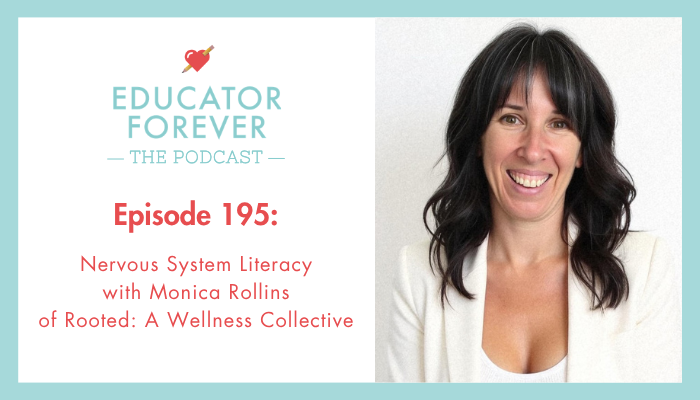
Monica Rollins is the founder and CEO of Rooted, a wellness collective. She partners with preschool programs to give teachers what traditional SEL training misses: practical nervous system literacy, trauma-informed yoga and mindfulness practices, and the co-regulation skills needed to lead calm, connected classrooms. Her approach is grounded in brain science, honors cultural responsiveness, and centers the belief that regulation, not behavior management, is the foundation of social-emotional learning.
In this episode, Monica tells me about her work in early childhood education, emphasizing the importance of nervous system literacy. We dive deep into the importance of regulation, and of course, we get into starting a new business!
Topics Discussed:
Starting in museum education
Using yoga in preschool education
The school-to-prison pipeline
Resources mentioned:
If you’re enjoying this podcast, please leave a rating and review on Apple Podcasts.
Related episodes and blog posts:
Read the transcript for this episode:
Welcome to Educator Forever, where we empower teachers to innovate education. Join us each week to hear stories of teachers expanding their impacts beyond the classroom and explore ways to reimagine teaching and learning.
Monica Rollins is the founder and CEO of Rooted, a wellness collective. She partners with preschool programs to give teachers what traditional SEL training misses: practical nervous system literacy, trauma-informed yoga and mindfulness practices, and the co-regulation skills needed to lead calm, connected classrooms. Her approach is grounded in brain science, honors cultural responsiveness and centers the belief that regulation, not behavior management, is the foundation of social emotional learning. Hi, Monica. So nice to have you here.
Monica Rollins 0:31
Hi. Thanks for having me.
Lily Jones 0:34
I would love for you to kick us off by explaining to us in whatever direction you want to your professional journey.
Monica Rollins 0:41
Sure. So, I came to the early childhood profession in kind of a non-linear route. I've been in the field of early education for about 20 years, but I actually started in museum education, and I somehow got hired to be the the head of the early childhood department at a children's museum in Los Angeles, and I don't know how I got that job at like 24 years old, but I really fell in love with the age group, and I realized even though I was, it was very innate for me to work with children this age and their families, I didn't really have the theory underneath my belt to make me feel like I was legitimate in this, and so I ended up moving to New York to get my master's degree in early childhood and special ed, and I ended up landing a job at a Reggio inspired preschool, and then I ended up being in the classroom for about 10 years. And during that time, I also was a huge practitioner of yoga and mindfulness myself. And so I started to dig into those topics, like anything that I can kind of sink my teeth into. I did my 200 hour yoga teacher training, and then I did a 95 hour children's yoga teacher training, and then I and then a few years later ended up doing my 300 hours. So I have actually over 750 hours of training in yoga, mindfulness, and trauma-informed practices, and so while all of that was happening in New York, I ended up making the big leap. I moved back to California and ended up working in the early Head Start world as an ed manager, and then the last one and a half years, I've been slowly building my business rooted a wellness collective. So now I'm an early childhood consultant, and so this where I am where I am now is kind of like a culmination of my professional journey so far.
Lily Jones 2:57
It's so interesting and inspiring to hear about you know just the windy path we all take of trying to work at a museum, being like, oh, I like working with little kids, and then oh, I need to learn a little bit more about this, and I'm also learning about wellness. So I appreciate what you said of it being like this culmination, this amalgamation of all these different things that you've done.
Monica Rollins 3:18
Yeah,
Lily Jones 3:19
s talk to us. I want to hear more about rooted, and I want to hear also about how you made that decision to go out on your own. Because I think a lot of our listeners are maybe in a similar spot of like you know they've been teaching or they've been working in education. They have an idea of something they want to do. How do you take the leap?
Monica Rollins 3:38
Yeah, that's such a juicy question. I feel like we could do a whole episode just on that. So I don't even know where to start. I would say like one of the things that I I had always had always been percolating as I was moving through like my professional chapters was like I just feel like there's something bigger for me. Like I feel like I love playing with the children, and I love you know using all my expertise and my knowledge to to really mold the minds of these young kids. And also, I feel like there's something bigger out there for me. It was almost as if like the classroom, like the physical classroom itself, was like it felt too much like a box. Like I felt boxed in, and I kind of like was hearing those whispers for for a while, and I started to branch out a little bit. You know, as a classroom teacher, I learned very early on that I loved doing trainings and I loved coaching and mentoring. I was a supervising teacher for you know preschool teachers that were going through their master's degrees, and so they needed their practicum hours. So I did. That for a few years, I was also starting to present at conferences and like doing little mini trainings for the the teams at my school, and so I was really starting to flex those muscles and like dip my feet into that, and I realized I loved it. And so, while all of this was happening, my grandparents they co-founded the Child Development Institute in Los Angeles, and my dad actually started his own yoga studio in the suburbs of LA. And so, and then like I grew up in a family, I always say, like I joke, I say I was raised in a family of shrinks and educators because that I was just surrounded by that. But what was fascinating to me is the entrepreneurial journey of my grandparents, and then also of my dad. And I was, and I I haven't made that connection until recently, but it's almost like I feel like as a teacher, you're like a natural born hustler, you know, because you have to figure out how to manage your time wisely. You have to figure out where you're going to get all the money for your supplies for your classroom. You have to juggle probably three different jobs to pay your bills, and so that's kind of like in our blood already. And for me, it was more like, how can I make the most money doing the least?
Lily Jones 6:35
Great question.
Monica Rollins 6:36
And so when I started to get paid to actually do workshops, like these side workshops? You know, like 500 bucks here, $1,000 there, and this was like 1012, years ago. I was like, "Dang, this is crazy! And like, I also was teaching yoga privately. I had a couple private clients, and you know, that was making me like 100 bucks an hour. And so, I, I was like, this would be really cool if I could do this full time. And then fast forward to a year and a half ago, I was working for an agency, and I thought it was going really well. And then there were just some really toxic things that came up, and actually, about a year prior to this, I had to take a mental health leave of absence because it was just a lot on my own nervous system and my own well-being, and so I took two months off, and I realized like I can't keep Doing this, I was fortunate and privileged enough for that five years to have saved up quite a bit of money, low key. I also lived with my parents for two and a half years, so that helps. There's any 40-year-olds out there or late 30-year-olds that are like, you know, they're thinking about doing it. I highly recommend if it's if it's available to you to to do that temporarily so that you can kind of get your sea legs under you, and so I had the money saved up, and I was like, should I do this? Should I not? I talked to my therapist like three times the week that I was like thinking about quitting, and she was like, "You've been wanting to quit forever. Like maybe this is just the universe saying like this is your time to go. And I had a talk with my parents, and they were like, "We support you. And as soon as I got their blessing, I was like, "All right, I'm doing it, and haven't looked back. So yeah, it's been a year and a half, and it's it's a struggle, but it's been worth it so far. And I'm finally starting to see a lot of the fruits of my labor, and it's really exciting. This this next chapter,
Lily Jones 8:59
it's absolutely exciting, and I think it's just so interesting to hear about all the different steps, right? Like you had this idea, and well, you kind of even had before even like a formed idea, right? Like this feeling that there was something else, right? Which I think many of us have. Like there's something else. Like it's not going to be this forever, and we don't really know what it is until we go along, and it becomes a little clearer and a little clearer. And sometimes we need a bad situation to make us make that leap, right? So I appreciate hearing about all those different parts, and also the things that you did and put together and sacrifice. You know, saving money, living with your family. You know, all those things are creative solutions to make the thing that you want to happen happen. Yes, and so I appreciate that because I think it's realistic. You know, we often feel like we have to wait for this perfect moment in time. You know, where we had this thing happen, or we feel totally ready, and that doesn't usually happen.
Monica Rollins 9:58
No, and I will say. Honestly, you're gonna tell yourself many times that same thing. Like, I'll do it when I'm ready. I'll do it when it's the perfect timing, and I will tell you right now for free that it's never gonna be the perfect timing. You're just gonna like if you really if you really want it, I would recommend just doing it, and then like worst case scenario. Listen, we have a teacher shortage in this country. This is the thing I told myself. I'm like the worst case scenario. I can always go back and be a classroom teacher again, you know. But like, I don't want to sit here with this regret. Like I've seen so many of my friends do it, and my family members, you know, really figure out this entrepreneurial journey. And I'm like, I owe it to myself, and frankly, I owe it to my community of early educators because I feel like I do have like a very nuanced expertise in what I offer, and I've seen it work wonders, and I've seen the benefits in my own classrooms, but also in working with clients. And it's like if I wasn't, if I didn't have the ability to do this full time, then I wouldn't be able to share that on such at such a scale. You know, like I would just be squeezing it in here and there, and so I, I think that oftentimes as educators, we're conditioned to believe that the classroom is the only space for us, and so we we kind of internalize this oppression, like our value is only worth what's inside the classroom, but we all are walking around with these gifts, and we can share them with the world on a much bigger scale if you just give yourselves a chance to do it.
Lily Jones 11:52
Here, here. I mean, I think it does make other teachers' lives easier and better, and kids' lives easier and better when we share those things, right? And so, as teachers too, it's so isolating. You're teaching in your own classroom, and you're doing these great things, and then it's just contained. And so, I love you know hearing about this as a way to scale that impact. And I think just thinking about your own personal decision, I appreciate how you were thinking about regret because I think we all, you know, you can think about the things that we haven't done. What do you want to not regret? Like now is the time to do it in some form, and maybe for some people it might look like just trying it out on the side. Totally might make sense to do a plan, you know, kind of like you did, like getting a path forward so that you can go all in, and all of that is valid as long as it's action.Imperfect action forward,
Monica Rollins 12:44
Yes. I highly recommend the imperfect action.
Lily Jones 12:49
The way to go. The llonger option. So tell us a little bit more. I know you've created something really awesome at Rooted a Wellness Collective. Can you tell us more about what you offer and how that came about?
Monica Rollins 13:02
Yeah. So, like I said, you know, I was trying out all these like different aspects of being in the education world, and the training, the mentoring, the coaching, the professional development, like that. That's where I light up the most. It's my wheelhouse. I feel when I'm giving a a presentation at a conference or I'm doing an interactive workshop with with a preschool program with a team of people, it's almost like I feel that I'm floating. I know that that is where I am the the The most like fulfilled in a way, and it's also where I am at my best. Like I'm at my best potential, and so that's what I built. I basically go into preschool programs, whether you're Head Start or you're a private pre-K, or you're a TK, you know, in a in a district classroom. But I offer professional development workshops to help teachers and children build self-regulation skills, and I also just recently launched what I'm calling the Regulated Preschool Yoga Academy, which is a program. It's an online program where I teach preschool teachers how to calm big behaviors and build real, real, real intentional connection in the classroom through the use of yoga and mindfulness. So, really figuring out how to use yoga and mindfulness as the vehicle to teach those social emotional learning skills that I think is so important, especially nowadays.
Lily Jones 14:58
So important, and I appreciate how you said. Regulation not only for students but for teachers as well, because I think sometimes we think so much about social and emotional learning for students, and everyone needs this, right? And it's really, really important that teachers also develop these skills. And I know that you've connected teacher regulation to the school to prison pipeline, which is a big claim, and I'd love to hear more about that.
Monica Rollins 15:26
Yeah, so it's not necessarily teacher. I mean, I would say yeah, it's wrapped up into teacher regulation, but I have some statistics here which are that might blow your mind and listeners' minds, but I have been in the work of like in the work of DEI and really thinking about how how is preschool. I think I need to edit some of this out, but let me see if I can like put this all together. I think that preschool learning is oftentimes looked at as just like play. Like as a teacher, you just go into it and you get paid to play all day. And while some of that is true, we are actually setting a really strong foundation and setting up children for like the trajectory of their their life. And what I mean by that is oftentimes in preschool, like children's brains are developing the most during the first five years, and especially with the onslaught of all this trauma that's happening in modern day, like we have ice raids and we have black folks getting murdered by police officers in broad daylight, and we have wars going on in Palestine and genocide and all of these things that we're internalizing in our own nervous systems, that on top of the fact of already just like being a kid in society, that that does something to our bodies and it does something to our brains. And so, what happens with that is some children might manifest their responses to that in what we call behavior, but the reality is that that kids this young under four years old are learning how to be social beings. Like that's one of the main reasons why I think you should advocate for putting your children in preschools because they're learning how to share. They're learning how to have a back and forth conversation. They're learning how to regulate their emotions, how to identify their emotions, how to trust other adults and peers in their life that are not in their family, and all of that takes time. It takes repetition. It takes an intentional learning environment for those things to really stick for children, and along that journey, yeah, they might be roughhousing a little bit. They might bite some children. They might knock some block towers down. But guess what? That's all developmentally appropriate, and so it's wild to me that when children are are showcasing their learning of social emotional skills, they're getting suspended or they're getting expelled from programs. And the craziest thing is that preschool kids, based on research, preschool kids are actually suspended three times more than kindergarten through 12th grade combined.
Lily Jones 18:46
Wow, I had no idea.
Monica Rollins 18:49
Yeah, like make that make sense, right? And then to top that off, typically what happens is it's the black and brown kids, especially the black boys that get labeled as like the aggressors or the children that are the most disruptive or destructive. Like we're putting all these labels on children's behaviors when really they're just learning, and at the age in which this is still, which this still should be socially acceptable, and yet because teachers, the adults in the classroom, don't necessarily understand their own nervous systems and their own triggers or the things that really like press their buttons and and get them to be dysregulated, then their first go to is okay. Take them out of the classroom. Okay, I'm going to talk with my director or my principal. Okay, this is not acceptable, and so therefore we're going to say bye-bye to the child. But what that does is that actually sets these children up for a higher probability of them ending up in the juvenile. Justice system, and actually, based on the research, children who are suspended are 10 times more likely to go to prison, which is like they're three, they're four years old.
Lily Jones 20:15
Yes, I mean, so upsetting. I think first of all, and also so important, right? To be able to change that, and to be able to see like the impact of teaching about regulation, you know, teaching about behavior and real underlying reasons of behavior, helping teachers make better decisions by being regulated. I mean, all of this-it's so complex and multi-layered, but so important. And I know you talk a lot about nervous system literacy. Can you explain a little bit what you mean by that?
Monica Rollins 20:51
It's my little catch catch term, catch phrase. So basically, just like we get literate in reading, or we're literate in math. Which, by the way, I'm not. I am not a math person. Never do. We, yeah, like this is why we do stuff like this. And it's the same thing with having an understanding and a literacy about the body brain connection. And so I have found that, especially teachers and especially early childhood teachers, there is a disconnect with our brain and body connection. And what I mean by that is we have been trained to, for instance, if we have a signal, if we have a need, like let's say we have to go to the bathroom, right? Our body sends us a signal, right? But our brain's like, nope, I I'm gonna ignore that. I don't need to care about that. Plus, I can't because there's nobody to cover my classroom, and I can't get out of ratio, and I don't want to get fired. And then how am I gonna pay my bills? And then, right? It's like so. Instead of paying attention to that signal, we just learn to ignore it, and what that does over time, it's very harmful on our bodies because then we end up having bladder issues. We end up having maybe other issues like in the some stomach area or bowel issues, things like that, and but the thing is, like the longer we go on ignoring it, the the longer that these harmful results are going to simmer, and so that's where I think the yoga and the mindfulness comes in. Is I want to bring adults back into their own bodies, so that when those signals are being sent, we, at the very least, are aware of them and do our best to have those needs met in the moment. And because the thing is, if we're expecting children to come in and be able to have it all together like that. Then we as adults, like we can't teach other children how to do that if we ourselves don't even have like a foundational understanding of that as well. So absolutely,
Lily Jones 23:16
Yes, absolutely. I appreciate that, and I know there's like so many ways that to teach this, and there are so many programs out there teaching mindfulness or SEL. And I'm so curious about your approach, particularly with preschool yoga. And I know you have these four pillars of kids' yoga. Can you explain those to us and how they're different from maybe a traditional SEL program?
Monica Rollins 23:39
Yeah. So first of all, like the way that I train is not like from a box or like through a script or like you have to subscribe to a certain curriculum. I think that the way that you can use yoga and mindfulness in the classroom, there's kind of two ways you can approach it. Number one is you can sprinkle it throughout your already established routines, and I'll talk about that in a moment. And then there's also a way that that I teach where you can actually do like a whole yoga lesson for preschoolers. That's and depending on the age group, like if they're around two years, two to three years old, I would say no longer than like 10 to 15 minutes, and then if they're older, definitely you can go up to 2530, even 45 minutes. I've been able to do, and so during those moments, whether you're sprinkling it in, like at morning meeting or right before snack time, or you're doing a whole lesson, you would be focusing on what I call the four pillars. So, the four pillars are movement, breath work, focus, and intentional rest or stillness, and so all of. These things are actually linked to developmental milestones and all of the developmental learning domains. And when I say movement, I mean intentional movement. It's one thing to to go to like your music and movement special and to like have a whole lot of fun and dance around and sing and play instruments, but it's another thing to be able to say, okay, we're gonna do some really fast movement right now. We're gonna move our bodies in a really quick way. But before I do that, before we do that together, I want us to check in with our bodies. So place your hands on your heart. Let's take three yoga breaths together, and let's check in. Where is our body? What does your heart feel like? And you know they're they're trying to figure it all out, so they're not going to be exactly on the mark. But the point is to start raising awareness. Then we do the big movement, the fast movement, and then we do a check again and see where they're at. So it's very different than that. And not to say that like music and movement doesn't belong in the classroom. I think it does, but there's also this more intentional movement-based yoga that you can bring into your classroom. Same thing with breath work. Breath work is all about like harnessing the power of the breath and teaching children that they have that inside of them, and really using breathwork in an age-appropriate way. It's not going to be like an adult classroom where, or an adult yoga class where you go in and it's like, okay, let's use our ujjayi breath and like breathe in through your nose and hear the whistling noise, and then push it out through your glottis and like feel the tickle sensate. No, it's going to be much more simple than that. But again, it's about bringing awareness. It's about introducing the foundation so that they get curious about the power of their own body and their agency in being able to use their own body and their breath to come back to this sense of balance when they themselves are feeling triggered or you know dysregulated, and then the same thing with focus, right? Like we talk, we always say things like this to kids in the classroom: Pay attention, don't forget to pay attention, focus on your homework, focus right. And it's like they're three; they don't know what pay attention. They're like, "Do I give you $1 so that like I can get attention? Like, what am I paying for here? You know? And so I incorporate different age-appropriate focus exercises throughout. Either you're sprinkling it in throughout the day, or doing it in the lesson. But then they start to connect. Okay, when I'm using my yoga eyes or my yoga ears, that means I'm paying attention. That means I'm focusing, and then you can generalize that to other parts of the classroom. If they're doing a puzzle, use your yoga eyes to really focus in on the pattern on the puzzle. How are you really using your eyes to see which piece fits where? And then the stillness or the active rest, intentional rest, is huge too. It's very different than just going down for nap time. It's really about, again, noticing the agency in your own body and being able to simply rest, quiet it all down, even if you're starting with 10 seconds, 30 seconds, giving them that gift of being able to just slow everything down in silence, and then moving on, you know, with the rest of the day. But those are the four pillars, and you can see how, or maybe I don't know, listeners hopefully can see how all of that is connected to like the developmental journey of of young kids.
Lily Jones 29:00
That's all super helpful, and I appreciate how you broke it down with examples too. Of just doesn't have to be huge, but incorporating all the different pillars in. So my last question for you, Monica, is for our listeners out there who are really thinking about taking a leap, starting something of their own. What advice do you have for them?
Monica Rollins 29:21
Do it.
Lily Jones 29:23
I agree.
Monica Rollins 29:25
Yeah. Also, something that I that I think was really validating after talking with you a few weeks back is that I think there's a lot of influencers and creators out there that will have you thinking that you'll be like an overnight success and a sensation, like instantaneously. And unfortunately, it doesn't actually work like that. It's going to be a little bit of a slow burn. And so, what I would actually, I have like some three, maybe two or three tangible pieces. Of advice, which is save up a little nest egg on the side. I think you should be doing that anyway. But that way, it gives you a little bit of a cushion, so that when you do decide to take the leap, you you you're not really all like as stressed about the money thing. And then the second piece is, as you're teaching, like really kind of take us a self-assessment. Like, what about teaching and education really lights you up? And maybe you're not going to start your own business that's in education. Maybe it's something totally different. But really start to think, like, what am I really good at? What do people always ask me for help with already that I can maybe start to monetize and start keeping track of that because from there you're going to really start to recognize what's called your zone of genius. And right now I think oftentimes a lot of teachers are operating in their zone of excellence, and it's a very different vibe. Like you don't float when you're in your zone of excellence, but you do float when you're in your zone of genius. And then the third thing I would say is, it's all about relationships. And so, as you're moving through your education world, there are people in your life that once you go out on your own, you're probably going to lean on them. They might turn into clients. They might know somebody who knows somebody who turns into clients, and you just never know. And I'll give you this one last example. This is when I knew I had proof of concept, and when I knew it was safe for me to like really go full on into this, but I, my very, I would say, my first big client. It was a five-figure contract. Happened because I was in a fellowship, so it was very academic, didactic. We were a group of 45 people. Probably this was five years ago at this point, and I met this woman. We we weren't like super close, but we were connected on LinkedIn, and we exchanged text messages or emails every now and again. But I reached out to her on LinkedIn within two weeks after I quit my job. We went out to lunch, and she hired me, and and now we we like talk very frequently, but you just never know, and it's really all about the relationships. Like, think about how you can just maintain relationships, build relationships, network, and keep those people like close to you, because you just never know how that's going to blossom into something that's going to be really helpful for you in your business later on.
Lily Jones 32:44
Great advice. Yeah, I mean, I appreciate your floating metaphor too. It's like you have to find the place where you float, like tune into what makes you float. And then, yes, absolutely about the community and the network. And I think intentionally and authentically building that too. You know, because I think that just like you're saying, you never know where it's going to come from. We do have to tell people what we want to do, and we're right because you never know. Oh, then somebody asks me, oh, do you know someone? And then yes, I do, right? And vice versa, right? Like we also need to be the people who are connecting and helping other people out as well. So I really appreciate all of that advice, and it's been so wonderful talking with you. Can you tell folks how they can connect with you?
Monica Rollins 33:28
Yes. So I hang out mostly on LinkedIn. So find me on LinkedIn, Monica Rollins R O L L I N S, and I will be launching a website in the next couple of months, so you can check me out on there. And if you want to find out more about regulated preschool yoga academy or workshops or anything like that, you can also email me at hello@rootedwellnesscollective.org. And I hope just reach out. would love to have some conversations with you.
Lily Jones 34:01
Yes, absolutely. Thank you again, Monica. I hope you have a great rest of the day.
Monica Rollins 34:06
Thank you. You too.
Transcribed by https://otter.ai