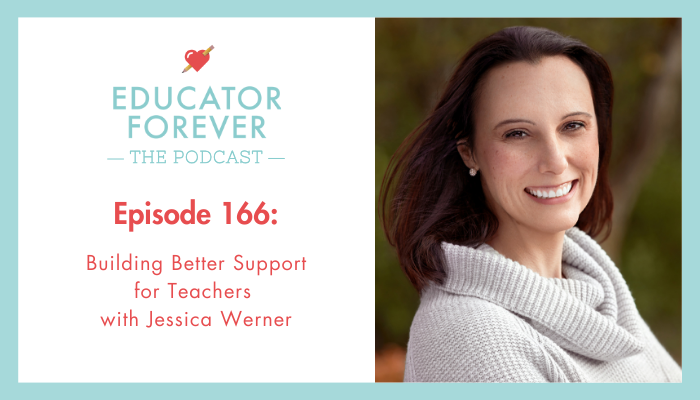
Episode 166: Building Better Support for Teachers with Jessica Werner
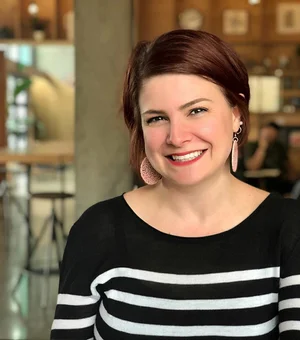
Jessica Werner, Ph.D. is the founder and CEO of Northshore Learning. She has worked with schools worldwide as an instructor, a professor of education and classroom management, and a consultant. She is passionate about helping to equip educators to work with students with varying academic and behavioral needs.
In this episode, Jessica details how her education journey started with a trip to Chile. She also details how Northshore Learning helps teachers and provides support through wraparound services and professional development.
Topics Discussed:
Teaching in Poland
The benefits of online support
Administrators need to provide opportunities for their teachers
Resources mentioned:
If you’re enjoying this podcast, please leave a rating and review on Apple Podcasts.
Related episodes and blog posts:
Read the transcript for this episode:
Welcome to Educator Forever, where we empower teachers to innovate education. Join us each week to hear stories of teachers expanding their impacts beyond the classroom and explore ways to reimagine teaching and learning.
Jessica Werner is the founder and CEO of Northshore Learning. She has worked with schools worldwide as an instructor, a professor of education and classroom management and a consultant. She is passionate about helping to equip educators to work with students with varying academic and behavioral needs. Jessica specializes in behavior support, including social and emotional learning, student regulation and self management, holistic approaches to student behavior and communication for general classroom students and students with additional learning needs. Welcome Jessica, so nice to have you on the podcast.
Jessica Werner 0:32
I'm so happy to be here. Thank you.
Lily Jones 0:34
You're welcome. So I always start with the same giant question, which is to tell us about your journey as an educator?
Jessica Werner 0:41
That is a giant question. I feel like there is just not any kind of linear answer here. But I mean, it starts with I didn't want to be an educator. I didn't know what I wanted to be, but being a teacher wasn't one of the ideas in my mind when I went to college, I actually got into education, kind of by accident. I was doing a service project teaching English in Chile when I was studying abroad there, and remember getting really excited about writing lesson plans and thinking, I think this is teaching that I'm so excited about. I was a junior, though, and I had a different major, so, yeah, even my journey into education was like, pretty untraditional, but I taught full time for six years, different places, Mississippi, Poland, Minnesota, yeah, mostly primary grades, and then I left the classroom full time to do my doctorate in education policy. And still, even though it was a doctorate in policy, I would teach graduate level courses, which was fun. It kept me in schools. It kept me up to date. Whether I wanted to be up to date or not, unlike current education trends, I couldn't, couldn't avoid them. I was seeing like all the new curriculums, looking at classroom management happening in real time and changing in real time. So yeah, it was when I, when I started consulting, also by accident, in 2018 I'd already spent many, many hours in schools, even though it wasn't my actual job at the time. And then in 2020 decided to see if I could be a consultant full time. Had absolutely no idea what the outlook was. The timing was terrible because, you know, pandemic and, yeah, everything has worked out really well. It hasn't been without its bumps. You know, you're a business owner.
Lily Jones 1:27
Absolutely. It's inevitable.
Jessica Werner 1:31
The word pivot is just like always in my mind, right? How do I have to pivot? How do I have to pivot so? But with all my different experiences in and around schools, I always, at the end of the day, I feel like I'm so lucky. You know? Like, what, what we do when we work with schools is something that is meaningful and it matters. And it matters like immediately, sometimes to people and for others, our students, teachers we work with, we get to see over time. But I just feel really grateful to have landed in education.
Lily Jones 1:51
Wonderful. I love hearing about that, and I relate to a lot of what you said, not knowing exactly what the next step is, until you're trying something out and you're realizing what lands for you, what lands for other people, and also absolutely on the pivots in business and in life, right? It like there are some things that we just can't expect or can't control, and so it's really about how we move through that.
Jessica Werner 2:18
Sometimes, too, I found it's not about learning the right thing. Sometimes it's about figuring out all the wrong things. Like, well, I know I don't want to do that or that or that, still don't know what the thing is. But yeah, that's been part of my learning journey. Is getting closer to the answer by process of elimination sometimes.
Lily Jones 2:38
Yes, absolutely. Sometimes we just don't know until we do it, and sometimes the things we try are not the right things, and so normalizing that as well. So tell us a little bit about Northshore Learning. What is it? What do you offer?
Jessica Werner 4:37
We offer a lot. It's kind of hard to put it into a succinct elevator pitch, which has been a problem of mine for many years, but basically, we offer wraparound services to schools for teachers, even parents. Now we've started offering parent services and our our goal is to keep good educators in schools feeling. Being well supported. So we do that by offering things that make them feel like they have more efficacy. So especially right now, around learning needs, behaviors, understanding, you know, the needs of kids today, because they keep evolving. They're different than they were five years ago, and they're much different than they were 30 years ago. So, and I think that's a big factor when people burn out, you know, it's just trying to keep up with what the students need, and feeling like you're never quite there, or you learn one thing and something new happens. So yes, the whole point of what we do is just to try and keep great teachers in schools, because there are a lot of easier ways to make a living right now.
Lily Jones 5:48
Absolutely, and it's a job that never feels like it's fully done, and so I think that can feel endlessly exhausting. I know when I was in the classroom being like, well, I don't think this can ever be finished.
Jessica Werner 6:03
You could work full time, 24 hours a day, seven days a week, like you could. It's entirely possible. You're right.
Lily Jones 6:12
So what are some of the ways that you all support teachers?
Jessica Werner 6:16
We do a lot of work around supporting teachers with student behaviors, classroom management, trainings, a lot of one on one coaching. We have two behavior specialists on our team at Northshore Learning and into other special educators. So actually, this is probably where the majority of our our work is coming currently, just from schools around the world, we have international partners who are seeing this change in student needs, and the teachers are looking for ways to support students, but just don't know the best way yet. And some of the things we're seeing, you know, we have a diagnosis for ADHD dyslexia, but we're starting to see a lot of behaviors that aren't fitting into one specific box, and that's where even people who are really well trained are are getting stuck, because it's a lot it's a lot of trial and error. What's going to work for this student today and it might not work tomorrow? So we spend a lot of time with teachers again, working to do like school wide systems that support good classroom management, but also we do triage, where somebody will say, please come help our teacher. She has a really tough class this year. Wanted you know, make sure she feels like she has some outside support, and we do this sometimes to complement the work of the principal, but a lot of times principals say, You know what? It just comes different. When it comes from you, it lands differently. So having somebody objective in your classroom who's also in a couple other dozen classrooms worldwide, who tells you, okay, what you're seeing is very normal and it is very difficult. I think that is meaningful for people to hear. Because Lily, no matter where people are they, I find this universally true. All teachers kind of feel like they're the only ones handling this tough year or this tough group. And there's just so much universal challenge out there that I like to remind people, it's not just you and it's just not just now. So, you know, give yourself grace,
Lily Jones 8:29
And that's such a value of you all going into many different classrooms all over to be able to provide that perspective too. Because I know, as a teacher, of course, you're focused on your own classroom, but then as far as you get maybe is like the classrooms next to you, right? So getting a broader context is so helpful, definitely. And do you all go in person to all these schools? Or do you work virtually?
Jessica Werner 8:53
Yeah, it's a mix. Most of our school partners are interested in having things done in person after 2021 when people had the option, definitely, most of our work happens in person, and because we work kind of anywhere and everywhere, that usually involves a consultant on our team, myself or one of my partners traveling. And so we'll go to a school perhaps two or three times a year, work really intentionally with a group of teachers, or with all the teachers, and then re evaluate after the year is done. But we also, we like to offer a hybrid option as well. Because, you know, the drawback to not going more than a couple of times a year is we don't get to see the progress. So we offer different webinars, coaching sessions, office hours, we offer like office hours, webinars, where people can pop in and and check up on progress, and get a lot of people will pop in and say, Oh, I'm having this struggle with the student, you know, and get real time. Support. So that's kind of fun. It's something I wish I had had when I was teaching. Like, imagine having just office hours you could go to once a week and ask a question of somebody totally objective, who's not going to judge you. I don't know. It's just it seems like an easy support to offer. And now that we can do it virtually, we can do it more broadly. So no, we work in schools virtually middle of the night. You know, when we work with partners in the Middle East and Asia, sometimes it's our middle of the night. But our our goal is just to make sure whatever we do is really contextualize to the need of that school, and that's why we're we're open to different ways of doing things. I don't have, you know, I don't have a package I offer. It's because I find that one size fits one. So it's whatever is going to work best for the school community, and whatever is going to be the best for creating, like long term change, long term sustainable change.
Lily Jones 11:05
It seems super helpful. And I love the office hours ideas too, because I can imagine also, if other teachers come to these office hours from different schools, it provides another way to learn and get support, even just through listening.
Jessica Werner 11:17
Exactly. It's kind of like group coaching, which is, which is a nice thing to have your school offer for you.
Lily Jones 11:25
Definitely. And so it's so interesting hearing you talk about going into schools in different places and different countries, and seeing a little bit about these different school systems, and can you talk a little bit more about what you've learned specifically around belonging, or really, any direction you want to take it that's universal?
Jessica Werner 11:42
Yeah, I'll say definitely belonging is universally sought. You know, parents in every country of every socio economic status, we including us, my family, I have a child starting at a brand new school today. So this is like mid, mid quarter, but we're he's looking for belonging. He's looking for a place where he feels seen and that he belongs, and that is absolutely universal. I think it's it's challenging for teachers everywhere, because, again, the needs of people are just they're changing, and they're growing in a lot of ways, and they're, you know, we're at this interesting place where a lot of the things we're seeing there people aren't sure where to put them. Is this a special education issue? Is this a mental health issue is this, academics like it's something we're in, this Venn diagram in the middle, where we just have this gray area, and that is universal, just trying to learn what the gray area is and how to help support students and parents and families in that area. I will also say universally, all the teachers I work with everywhere are really committed to their work. There are a lot of countries that put educators at a higher level of like, societal respect than the United States, and so it is easier in some places to be a teacher, and you may or may not make more money, but no matter where they are, people are driven by the same things. They they want to work with students, they want to serve their communities, they want what's best. So I always am just surprised and struck in any new school or country. I don't know why. I'm surprised, because I find it universal, but it's always this, just like human understanding that people in this job, they have some certain qualities in common. So yeah, I love, like you said, I love being able to bring perspective and then be able to say, like, pretty confidently, No, I've never seen this before. This is a new problem, whereas it's often it's like we saw this two days ago. And sometimes it's us putting people in touch with each other. Talk to Mr. Jones at this school, because he's been working on this. And two heads are better than one, you know, so different. Like I said, we get kind of creative in how we try to support people.
Lily Jones 14:31
Yeah, definitely. And you mentioned that you taught in Poland. Can you talk a little bit more about how did you make these connections with schools all over? How do you get them to know about you?
Jessica Werner 14:41
Well, it's slow. I taught in Poland in the 2000s mid 2000s because I had a friend who had worked in an international school in Mexico, and I didn't even know that this system existed. Um, you know, I understood the US context. I understand public schools, tuition based, charter, international schools. I you know, I understood there was like governmental schools, just like our public schools in different countries, but I didn't realize that there is a network, in a system at international schools, where a lot of people who have jobs, like the military foreign service business, where they move around a lot, and they send their kids to international schools in different countries. They're usually located in the capital cities. The language of instruction is usually English, and this is a way for really mobile families to make sure their kids are always receiving a quality education. And so being in Poland that year was so eye opening because I learned, like, Wow. I mean, I learned about the system, but also about the people, the type of people who go to these schools and the families. And when I started my business a few years ago, I realized right away that if I wanted it to be a big, sustaining business in education, a it was going to be really hard, because this is a really, really tough industry, but that if I was open, which I was to travel, then All of a sudden, I could work anywhere. You know, I could what, what I was seeing were needs we were hearing about everywhere. So just over the last couple years, I've really started attending more international conferences. I'm invited often as a speaker or a keynote speaker, and that's a way where I get to be in front of new schools and new people and learn about new schools. I've never even you know, thought about existing and some in these teeny, tiny countries, and I was at the International School of Curacao a few times several years ago, a great place to go work for a while. So, yeah, it's just been really slowly, a lot of networking, a lot of forming community, which is something I enjoy doing anyway. But then, most importantly, when we do get a contract for work, it has to be really well done. So we do a really good job. And so that has helped the word spread more organically, like between our school partners, which has been exciting to see happen in the last two years. For sure. Yeah, that's great.
Lily Jones 17:31
And so I know you said teacher well being is something that you see many people struggling with all over and teacher sustainability is definitely something, you know, I see in my work with teachers too. It's just incredibly hard, and so I appreciate the focus that you put on supporting teachers. And can you tell us a little bit more about what you think meaningful support looks like for teachers?
Jessica Werner 17:55
Yeah, I, and I was actually speaking about this earlier today with somebody who said, what's the thing I can do tomorrow to help support teachers? And I said, Okay, meaning support, meaningful support, looks like from the admin end. Whenever I look at things that I'm are on my teachers plates or being added to my teacher's plate, I have a separate column where I add what level of support they're going to receive for each new thing. So it's really thinking intentionally about the workload, what people are managing when, what's being added, and then what is my role, or how am I contracting with others to help support the teacher in this new initiative, and I think that is what the data tells us, that the research tells us teachers don't mind doing hard things, they don't mind learning new things, but they want to do it with an adequate level of support so they don't feel like it's just one more thing. So I think being really intentional about thinking, okay, how am I providing support for this initiative that is being asked of my teachers,
Lily Jones 19:06
That seems super important and something that should happen way more often, really thinking about not only this thing that we want to happen in classrooms, but the support that needs to be given to teachers to actually make it happen in a sustainable way.
Jessica Werner 19:21
And we get really excited about new initiatives. Like in education, there's so many there's so many shiny objects, and usually new initiatives are brought in because they're going to help the teacher. It's going to make teaching easier, it's going to make the students more engaged. But everything new is also an ad. It's like an add on. So if we want it to be as effective as possible, offering support in addition to introducing something new, is pretty helpful.
Lily Jones 19:51
So I want to shift gears a little bit and talk about your own experience starting Northshore Learning, and I know from building a business, you know, I went to. Teacher, similarly to consultant and curriculum developer, to starting educator forever. Didn't really set out to build a business, but here I am, and I really learned so much through the process, and so I would love to hear from you what you've learned through the process, specifically what you've learned about yourself through starting Northshore Learning.
Jessica Werner 20:21
Yeah, I think this is a realization that came to me recently. You have to be very open to risk to go out on your own. And I don't think I had adequately thought that through, which is probably okay. I think I'm a big overthinker, so I think if I had thought it through for too long. There is no way I would have done this. I would have stayed in a salary job that, you know, I could rely on, okay? But no, I took the risk one out on my own. But I've also found my edge of where I become risk adverse. And in the last couple of months, just with funding changing, the possibilities of funding in the States, actual funding, there's a lot of volatility, and I've, I've like learned where I can put myself in order to feel like I can ride the the waves, the highs and lows. And in a lot of ways, it turns out that, and you've probably realized this as well, general business advice and other industries just doesn't work. In education and listening to that inner voice over the years who's been like, I don't think that's how it's gonna that's not the best way to do it, or that's not what I'm not gonna cold call you and like, try and get you on the phone, and that's not how it works with schools. Schools are about it's about relationships. It's about trust. So yeah, finding where, where, what I'm willing to risk, where I'm willing to stop, and also just the intuition of knowing what will and won't work, knowing what I know from working in so many schools,
Lily Jones 22:01
That sounds like a lovely combination, too trusting your own experience and that you have this knowledge, and also, you know, integrating some other advice, but critically right, that we also need to not take advice blindly and really integrate it into our own settings And what we know as well.
Jessica Werner 22:21
Well, it sounds, yeah, when you say that, it does sound like a good combination.
Lily Jones 22:27
But I know, yeah, I hear you, though, in reality, it can feel, I mean, it's hard, and it's hard to do these things that even trusting what we know, because when it's so noisy, or when it feels uncertain, it can feel like, oh, I should go with this person's advice. And I think it's a balance. You know, of course, we need to learn from other people and learn from people who've had experiences that maybe we haven't had, but also trust our own experiences.
Jessica Werner 22:53
Yeah, I like the word noisy. That is a good way to describe what it's like to own a business. Yes.
Lily Jones 22:58
Yes, absolutely. I mean, I always try unsuccessfully, most of the time, to have some just like white space. I call it like stare at a wall time, because it is so noisy. You know, when I don't have that break between many meetings or whatever it might be, it just gets so hard to even listen to your inner voice.
Jessica Werner 23:19
Yeah, absolutely.
Lily Jones 23:21
So how about for our educators out there who are looking for a change? You know many of our listeners, they may want to say classroom teachers and do something on the side, or maybe they're ready for the next step in their education career. What advice do you have for them?
Jessica Werner 23:38
There's so many people thinking about this right now, many more than I think anybody who actually works in education realizes there are a lot of people considering not staying in education long term. And I know this because they contact me and they ask about work, and you know how I started my business, so I know there's a lot of interest out there. First of all, I would say, and I give the same advice to administrators, if you are a teacher and you are looking for more leadership and responsibilities, bring that up to your administrator. Like the advice we give to admin is to provide these opportunities, but I find that in a lot of schools, there's just kind of a big gap between teacher and admin, and they think, Oh, well, what does leadership look like if the teacher doesn't want to go back to school to become a principal, which most of the teachers I work with do not Want to go back to school to become a principal. So offering opportunities to teachers, you know, to lead in house, PDS, or, you know, even to guide a faculty meeting. You know, these are all leadership opportunities that can build and the. Build a person's confidence, because not a lot of teachers think about leadership either, just because in education it's so binary. It's like admin teaching. But for teachers, I say, don't be afraid to ask if you are interested in leadership. At least see if your administrator would be open to it. We know one of the things that keeps teachers in schools is having the opportunity to develop as leaders. And so if that's something your school is missing, bring it up. Help them create it. Come up with some ideas, and don't be afraid to advocate for yourself absolutely.
Lily Jones 25:44
Yeah, I think that feeling of having some sense of agency is so key to moving through burnout, and sometimes we can create those opportunities within our current settings. It doesn't necessarily mean you know having to go somewhere else entirely, and you can think about it as a way to build your skills.
Jessica Werner 26:00
Right, and not to assume that your ideas are bad or because they're different, that they won't happen because they haven't happened. And not to be afraid to really build it for yourself. Sometimes we wait. We wait for the opportunities. Oh, you know, maybe next year, the school will offer something I say, don't wait, especially given where we are with teacher retention right now, just ask for what you need. Don't be afraid to ask.
Lily Jones 26:31
Yeah, great advice. Well, Jessica, it's been so nice talking with you and learning more about your work. Can you tell people where they can connect with you?
Jessica Werner 26:39
Yes. Come say hello. The easiest way is through our website at Northshore learning.org and you'll see there, we host free webinars at least once a month, either conversations with other people, or where we're giving content. And I try and always include free opportunities, because I know, I know finances are an issue for our teachers, but also, if you're an administrator, check out our courses that you can take as an administrator. You can offer them to your teachers. Sometimes that is a nice way to offer something without having to bring somebody in or committing to having your full staff take the training. So as as we learn and grow as a business, we're learning differently how how to support admin and teachers better. And if you have an idea, please share it with me, because I do try to practice what I preach. I would love to hear suggestions, and I'm constantly trying to figure out what's next and what's new, so don't ever be afraid to give me ideas.
Lily Jones 27:45
Wonderful. Thank you so much.
Jessica Werner 27:48
Thanks. All right. I appreciate it. Bye.
Transcribed by https://otter.ai